Showing posts with label Work. Show all posts

Saturday, May 30, 2015

How Much Should I Charge for Graphic Design Work?

One of the most critical aspects in almost everything we do in today’s corporate world is graphic design. When you build a website, it’s the design that would make page after page appealing enough for the visitors to decide to stay and see what else you have to offer. In marketing a brand, it’s also the design that creates the mood for the target audience and makes them realize how the products that a particular brand offers fit their personality perfectly. This is why it’s important to invest in graphic design. But the problem that graphic designers usually have is this: how much of an investment should a client put into my work?


Your Contribution


Before figuring out how much your rate should be, it’s important to realize just how important your work is. A lot of graphic designers have no idea how much to ask for because they fail to see the importance of their work. Knowing what value your product gives to your clients would also somehow help you quantify the value of the work you do.


Personal Identity


With every client you work with, you immediately become responsible for creating an identity for them. It’s not about you or who you are as a designer. It’s about what the client wants and what suits them the most. If you fail to give the client an identity that describes them perfectly, you also fail to give them the value that they paid for.


Brand Recognition


Your work is the main ingredient in allowing consumers to recognize a specific brand. You wouldn’t know it’s a Nike store unless you see that swoosh. You’ll recognize a McDonald’s from far away the moment you see those golden arches towering over one of their restaurants. You see anything red and white, and you automatically think of Coke. This is how huge design’s impact is on a brand. And this impact is what you create as a designer.


Your work as a designer is a form of communication. Through the design you build, your clients are able to communicate with their target audiences and relay their main message. Do they want to tell their customers that they’re a fun business to work with? Do they want to show that they mean business? Do they want a customer to feel safe with them? These messages can only be delivered to each customer if you come up with an effective design.


Let’s face it, any business that has an unappealing design would struggle to retrain their customers no matter how impressive their products or services are. It’s just hard to take a business seriously if they give you that impression that they don’t even know how to represent themselves effectively. This is what makes businesses lose clients, and of course, lose their chance of profit. Your work is something that would reel prospects in. It’s that neon sign that points any business out to customers and tells them that this is a better investment than the others.


These major contributions make you an integral part of your client’s setup. These are the things that you should remember in trying to come up with that perfect pricing scheme for the work that you do.


10 Important Questions to Ask Yourself


Before coming up with a final price, there are quite a few questions that you need to ask yourself first. These questions would allow you to come up with the most reasonable price possible for each service that you render.


  1. What services are covered with the project?

  2. What are my overhead expenses?

  3. How much money do I want to make in the end?

  4. What is everybody else charging?

  5. How badly do they need my services?

  6. Am I an expert in the nature of the project they’re asking me to do?

  7. How extensive is my experience?

  8. Will I charge hourly or will I charge a flat rate?

  9. How much is the client’s budget?

  10. What is my business strategy?

Once you have answered these questions, it would be a whole lot easier to figure out whether the price you are asking is reasonable and fair both to you and the client. Remember that you want to charge a reasonable rate while still staying competitive.


Tips in Coming Up with a Pricing Plan


Pricing Plan


Coming up with your rates is no easy feat. There will always be a number of factors to consider. If you focus on the right things however, it’s easier to get a clear perspective and figure out what the fairest price would be. Remember that in this line of work, there is always a risk of either charging too much, or charging too little.


Here are a few things that you should remember:


Make a profit


Don’t be afraid to give your client a price where you will actually make some profit. This advice is something that beginners should never forget. A lot of beginners think that it’s just about gaining experience for now. They give their clients such a low price because they feel that they do not have enough experience to demand for something that would actually give them a little extra.


Make sure the price you ask for does not just cover the costs. And definitely, you should never think about giving your clients a price where you lose out, either. Give them a price that would give you a reasonable profit to cover the effort, the sweat, and the mental energy that you drained as you worked on that project.


If you charge an hourly rate, make sure the client understands every aspect of the work


It always boils down to a question between charging a flat rate and charging an hourly rate. A lot of designers charge an hourly rate because this means that every minute that they are working is paid. However, clients are often wary of this system because they feel that they might be billed higher than necessary.


This is why it is extremely important to make sure that every client you work with has a clear picture painted in their mind the moment you tell them that you charge by the hour. Have a clear timeline of every step of the process. Show them the deadlines and potential problems that could cause a few delays. And whenever a problem comes up, be open to the client about it. This way, they know that every hour that they pay for really is worth it.


If you charge a flat rate, always set boundaries


A flat rate is always easier for clients to accept. However, you should also set a few boundaries when you charge a flat rate. You may be charging a low flat rate for a project so huge that you end up on the losing end. Make sure you define the services included with a specific project because the client might end up loading you up with a bunch of tasks, thinking that the rate they paid for includes everything on their mind.


Make your rates clear and specific. You could tell them that basic graphic design would cost them 0, but if they want you to handle the entire project, there would be an additional 0 for that. Have a list like this so that clients can easily choose the services they want and pay the flat rate for each service. You can even package a few services together and come up with a single rate for that to make it easier.


Know what you’re getting into


A lot of graphic artists actually charge extra should they encounter difficult clients. Remember that the more demanding a client is, the more tiring it would also be for you. It could literally drain all your creative juices, making work a little too hard for you. This could become a potential problem especially if you have another project lined up.


Before starting on any project, do some research first. Are these clients easy to get along with? How demanding are they? Look for other people they might have worked with in the past. This would allow you to have a clear picture of what you are getting yourself into the moment you sign that project agreement or contract.


Raise your rates when it’s time


You can’t stay at a single rate for the rest of your career. Especially when you work freelance, it’s always up to you to reward yourself with a raise every now and then. So how do you figure out when to give yourself a raise and start demanding more from your clients?


The moment you get swamped with work, this is the perfect time for you to raise your rates. Being offered project after project means that your services are in demand, something that you should take advantage of. It’s saying, “If you really want me to work on your project, you have to pay the price.”


Ask for a payment up front


Some ask for 50%, while some ask for 25%. This depends on your costs and if you have enough money to cover for them while the project is underway. This does not only ensure that you have a working fund to support the initial phases of the project, this also ensures that the clients stick around the moment the project starts. This has happened over and over again, with graphic designers working so hard on projects where the clients suddenly disappear. They end up losing a lot of time and money that was not even covered by the client.


You could also tell the clients that this deposit is non-refundable. This is an even better security measure for you, in case they suddenly decide to say that they’ve changed their mind and they want their money back.


Always start high at a negotiation


If it boils down to a critical negotiation, always start at a high amount. Think ahead and play different scenarios in your mind. Always think about the numbers that they would throw at you. “If I ask for this, how much would they want to take out of that amount?”


When you do your computation, you have to make sure that the point where you’ll be coming up with the compromise is the point where you want to be in the end. You can’t ask for 00 if that’s the rate that you really want. You start at 00, which they could lower down to 00. Who knows, you could even ask for 00 after that and end up with 0 more of what you initially set out to get.


Be flexible


Just because you already have a set price list does not mean that you cannot negotiate any longer. You also have to be flexible, otherwise, clients could turn away and get somebody else no matter how badly they want you to be on their team.


You could throw in an extra service in case they opted for a really high package and are asking for a discount, or you could convince them to get a few extra services with the promise of 10% discount.


Be competitive


What does everybody else charge for their services? Always base your price on this. No matter how great you think you are, your potential clients will always have a few other options up their sleeves. This means that the moment they decide that you’re just not worth it, it will be easy for them to invest that budget onto someone else.


If you do end up charging them a little higher than what everyone else is asking for, always be ready to justify this. You may have more experience over the competition, or the tools that you use may be more advanced than what they have. You may also be able to deliver the results they need within a smaller timeframe.


Don’t be afraid to lose clients


Some graphic designers end up saying yes to an unreasonable offer just because they want the client to stick with them. If you believe that it’s a budget that you cannot work with, don’t be afraid to say no. Remember that for you to be able to deliver top results, you also need the necessary resources to make it work.


If a client is trying to pull your price down to an unreasonable amount, just say no and walk away. If that’s how badly they need your services, then they would understand that they also have to pay the right price for it.


Sample Formulas for Pricing


Pricing Formula


Here are three basic formulas that you can adopt in case you are still confused about how to come up with a pricing package.


Expenses + Salary


Just figure out how much your total costs are. Look at what you are hoping to earn by the end of the year and divide it with the number of working hours. This should give you a total per hour rate that you can base your salary from.


(Rate Per Hour x Hours to Complete) x Complexity Level


This should give you a pretty good idea on how to price package rates. Create a table on the complexity levels and how much the difference would be as the project become more challenging.


Quote from Contractor x 1.10


This is a pricing usually used for outsourced work. Of course, the multiplier that you want to use would still depend on the resources, tools, and other things that you would need. The bigger the project, the bigger your multiplier could also be.


Know Thyself


Remember that when it comes to pricing, there is no exact formula that’s right for everyone. The price you ask for would still depend on the circumstances. Do you still have a few other clients lined up? Is this a project that you want to work on so badly? Would working on this project take up all of your time that you wouldn’t have time to work on other projects for quite a long period?


Make sure that you know who you are as a graphic designer and how great your work actually is. From here, always put that value into every price that you ask for. Remember that each cent that the client pays you defines how much you are worth as a professional. Make sure the price really represents you, and does not cheapen your work, nor does it exaggerate what you can really accomplish as an artist.


Products Seen In This Post:



getpaidtowrite-banner
How Much Should I Charge for Graphic Design Work?

Tuesday, April 28, 2015

Work From Home: The 10 Best Sites for Landing a Remote Job

A long commute, terrible traffic, constant distractions and impromptu meetings; there are a ton of reasons that you might find your office gig to be more hassle than its worth. If you’re ready to trade in your cubicle for a home office, then it’s time to start your remote job hunt. These days, there are tons of companies who actively recruit remote designers, developers, and other tech-focused roles. The trick is simply finding what’s out there. Hopefully, this list of ten awesome remote job sites will be your first step towards your exciting new career, sans the drive to work!


1. JobsRemotely


romote=jobs


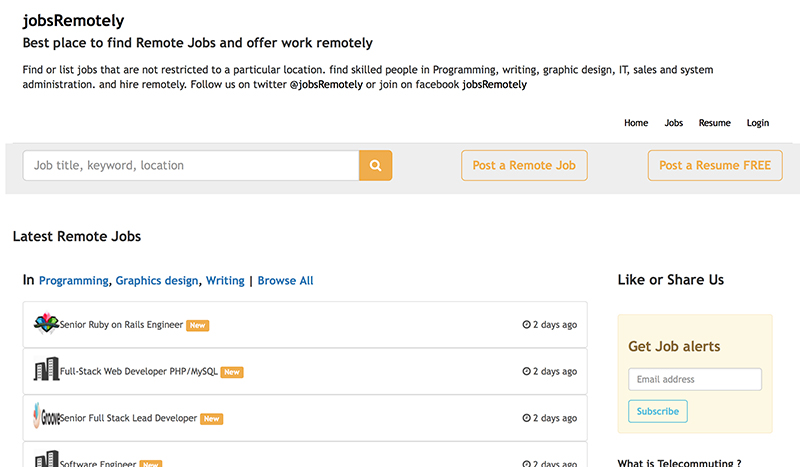
As the title suggests, JobsRemotely only handles remote work opportunities. There are no fees associated with using this site which, is cool. When looking at their job listings, use the ‘Browse All’ option and then you can narrow your search from there, giving you more job options to consider.


They have a Facebook page that lists the jobs as well, that may be more appealing if you prefer to just scroll down and see more details of the job rather than having to click on the job for more information on their main site.


2. Jobscribe


romote=jobs


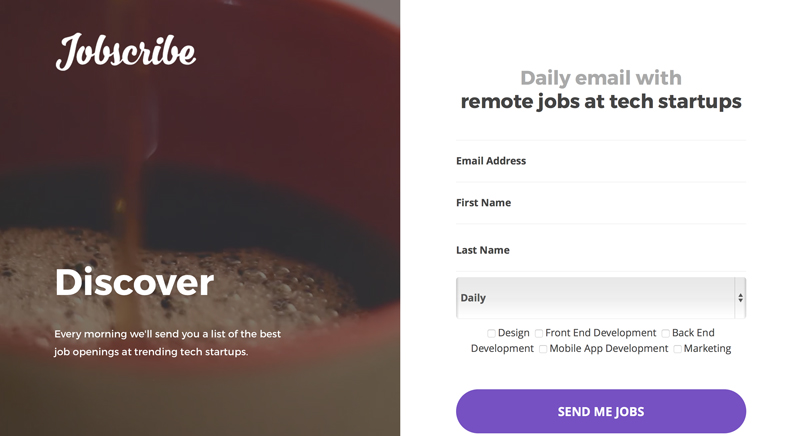
The benefit of Jobscribe is that you can specifically target your area of interest and receive emails that fit your profile. In addition, you receive the option to choose how frequently you want to receive notifications (daily, weekly, or monthly). It’s a hassle-free way to see what’s available out there, no matter what stage your career is in, so you can keep your options open.


3. FlexJobs


romote=jobs


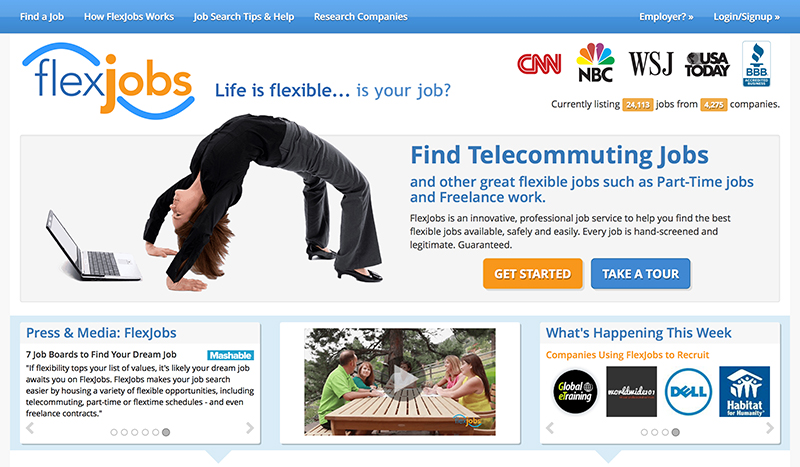
As an A+ business by the Better Business Bureau, FlexJobs has been reported on CNN, USA Today, NBC and other notable news sources. The site is fee based, but reasonable. If you only want to pay for one month, the fee is .95 but if you choose three months for .95, you’re only paying per month. A year long subscription is .95, which is a 61% savings. It all depends on what your objectives are, as in part-time, short-term, full-time, or long-term.


As a visitor to the site, you are able to check out what jobs are available. This is a great tool to see what they have to offer, and if it looks promising, then you can decide to join for whatever length of time you feel you may need. Since FlexJobs also provides jobs at specific locations, should you only want to see remote jobs, be sure to click on the ‘job type’ bar and select ‘remote only’ or you’ll get frustrated sifting through the wide variety they have to offer.


4. We Work Remotely


romote=jobs


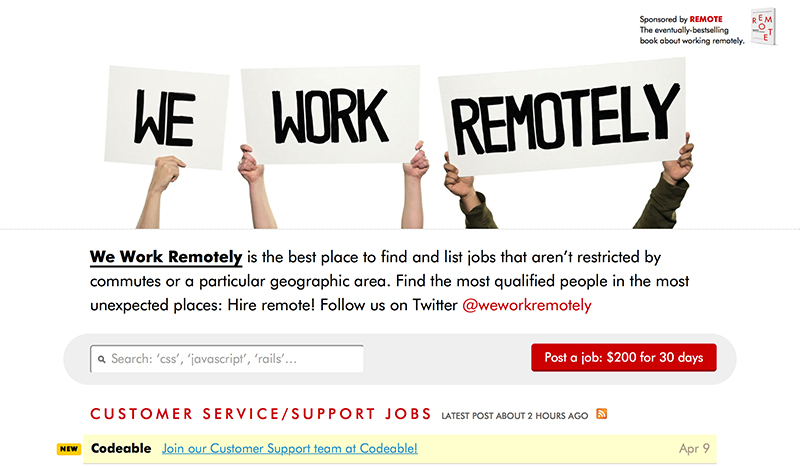
We Work Remotely is a ‘no-nonsense’ site for finding remote design and development work that has no fees associated with job seekers. The only thing that is a bit of a drawback is that the listings aren’t as plentiful as other sites, but the companies they work with are solid.


5. Wfh.io


romote=jobs


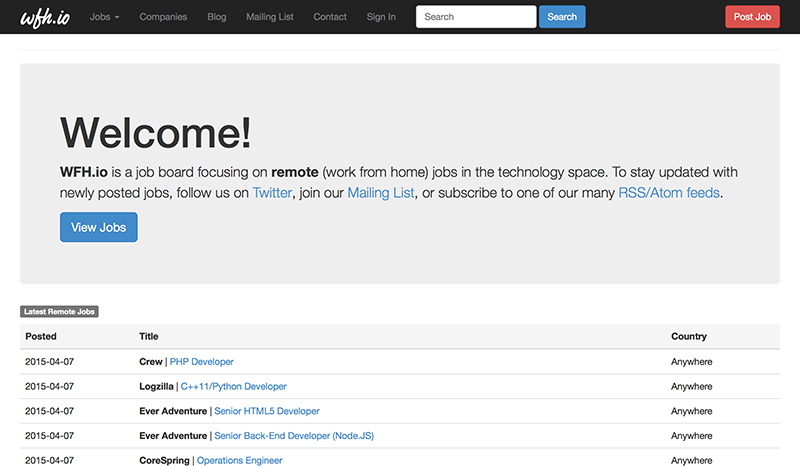
When visiting Wfh.io, just click on ‘View Jobs’ and the opportunities available will be listed by category and date listed. They have a queue ‘mailing list’ where you can sign up for free, checking job categories of interest and then receive an email when jobs in those categories are new listings. You will also receive emails when announcing site updates to keep you in the loop of their activity.


No fees are attached to searching this site. Should you have an interest in gaining remote work with a specific company, check out their ‘Companies’ tab on top which has a very long list of companies they work with and indicate if they have any current job listings.


6. RemoteWorkHunt


romote=jobs


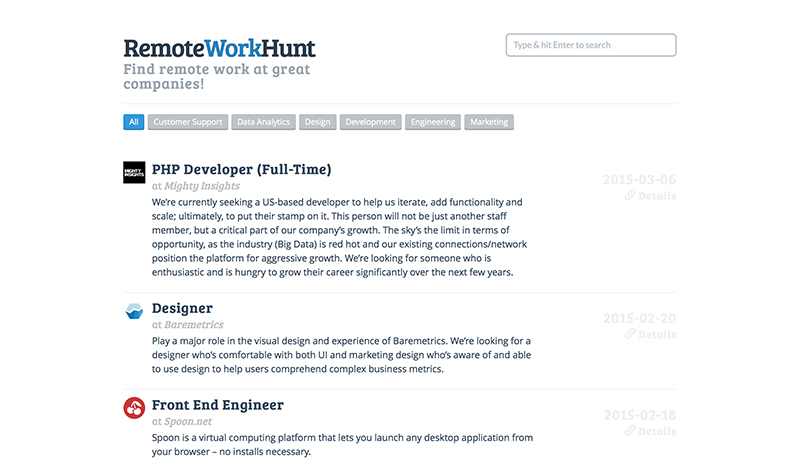
RemoteWorkHunt is one of the easiest sites to navigate through. The top queue bar gives the work categories, so simply clicking on your area of interest provides you with all jobs in your field. If you click on ‘Subscribe’ you can enter your email to receive job notifications. This site offers solid remote positions with great organizations, but the amount of jobs listed is not as large. It’s still worth the viewing if you’re in the hunt!


7. NomadCenter


romote=jobs


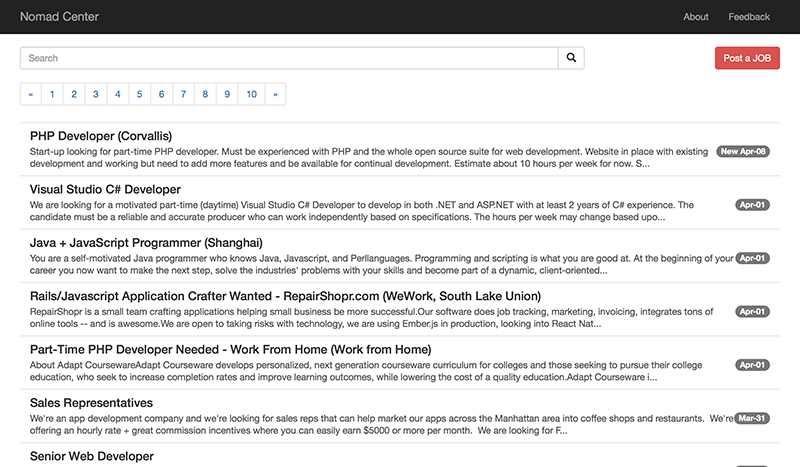
NomadCenter provides one of the larger pools of remote job opportunities and is fairly easy to navigate through. There is no fee for job searchers or, apparently, employee hunters. Yet there is also no line asking what you’re searching for, so it’s important to know what you’re looking for so you can enter it on the site search. With that said, as long as you know what you’re looking for, it’s worth checking into.


8. Working Nomads


romote=jobs


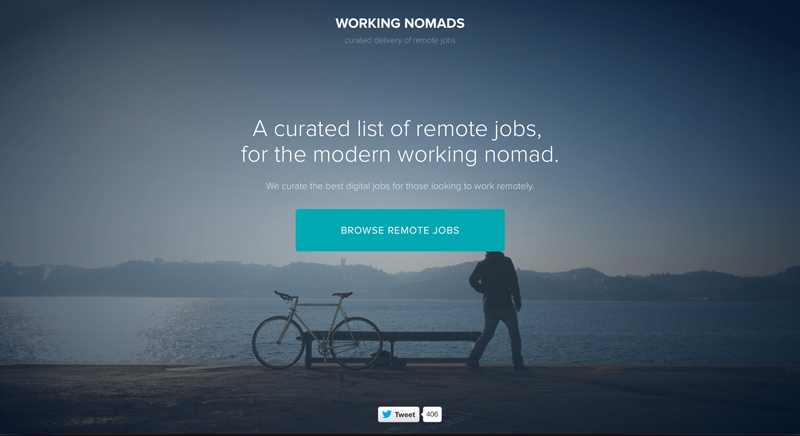
Another site dedicated to remote work, Working Nomads is heavy on design and development positions. Out of 6 job categories listed, development is at the top and design has the second most opportunities. At the time of writing, they have 310 jobs listed for development work and 44 in the design category. Not bad! There is no fee attached and it also provides the option to subscribe for free to receive emails regarding new jobs you may be interested in. Definitely worth having a look.


9. Virtual Vocations


romote=jobs


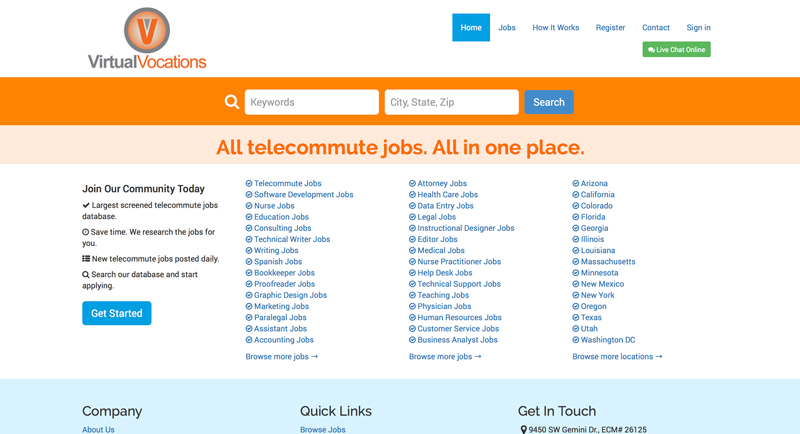
Virtual Vocations is another very comprehensive site. Although currently holding a B+ rating with the Better Business Bureau, they have consistently sought to improve customer satisfaction to up their rating and are close to an A rating. They offer both free and paid memberships. Pricing for paid memberships are listed as .99 for weekly, .99 for monthly, .99 for 3 months, and .99 for 6 months. In the worst case scenario, you’re looking at per month long term to access the site.


With a free membership, you can access jobs, list your resume, access a record of jobs you’ve applied to and create personal notes on jobs applied to. The benefits of being a paid member provide access to a database of telecommuting companies, create a personalized portfolio of work samples and a confidential upload and storage of resume and cover letters to quickly apply to new jobs. They claim to be the largest, screened telecommute jobs database and possibly may be. When you enter the site, there is a list to choose from larger than any we’ve seen so far.


10. Remote Internships


romote=jobs


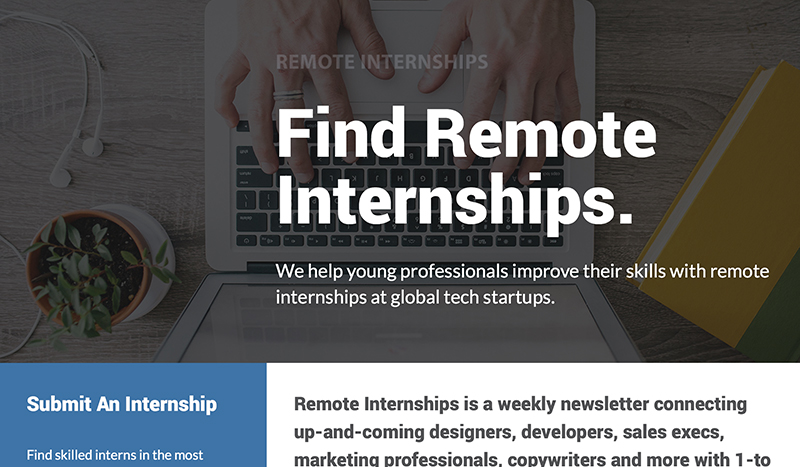
Remote Internships is a great site to help a designer get their foot into the door of a tech startup. If you want to make your mark on a startup, this is the place to go. Their intern focus is on Programming, Design, Business, Marketing, Copywriting, Customer Support and Miscellaneous. Definitely a good spot for a cutting edge talent.


What’d We Miss?


We searched far and wide for the best remote job sites, but we’ve no doubt missed a few gems. Leave a comment and let us know about any that you’ve seen lately. Also let us know if you’ve tried any of the sites above and whether or not you found them to be valuable.


Work From Home: The 10 Best Sites for Landing a Remote Job

Thursday, April 9, 2015

Why Konica Minolta Printers Work Best For Your Creative Business

Printers often play an important role in a majority of businesses, whether you’re in an office or not, and it’s especially important to make sure you choose the right technology from the best suited supplier. There are a lot of companies out there offering a range of printing equipment, Konica Minolta being one of them. So why exactly should you opt for this top of the line company?


Print Services


Purchasing printers is also about the package you receive with it. While the technology itself will need to meet your requirements (and Konica Minolta certainly cater to your every needs), we mustn’t forget about the services offered as well and this is where Konica Minolta sets itself apart from its competitors. Look at the great services Konica Minolta has to offer. They have Optimised Print Services (OPS) to help businesses manage everything far more efficiently. This excellent combination of device quality and service does stand out from competition.


Printing requirements nowadays have become a combination of devices that implement printing, copying, scanning and faxing. Problem is a lot of companies have no real means to monitor and manage their usage. Konica Minolta’s OPS centres on five key areas to do help with this and offer the best service possible to its customers; fleet, finance, security, fleet and green.


Monitoring Tools


Monitoring tools can help in raising efficiency and organisation within a business. For starters Konica Minolta’s automated meter reading removes the need for manual submission, reducing administrational costs and time spent. Likewise monitoring can help stay on top of toner levels, alerts and replenishments sent out when required without the intervention of a human. Any issues that might present themselves can be monitored and passed over to the technical helpdesk team where a technician can be sent out when required. Basically, these monitoring tools can improve a company’s productivity and eliminate unnecessary manual tasks.


Reporting


While automated monitoring will aid a company in flagging problems and issues that need attention, reporting will help in keeping track of important status and information. Companies as you might expect house a number of printers and other devices. Keeping track of each of them can be tough if not given the correct tools. Fortunately Konica Minolta can deliver three key reports to your inbox each month all containing useful data that can help your company save money and run more efficiently.


These reports contain information such as usage per device. This proves especially handy when deciphering where within the company you might want to consider removing unused devices or purchase new ones for busy areas. Likewise costing reports that give you a breakdown how much prints are per machine can again allow you to make the necessary changes to reduce the cost of using printers within the business. All devices get old and keeping track of which ones are due a replacement or upgrade is a key in keeping them running at full efficiency.


These are just a few of the extra services Konica Minolta offers and when coupled with a top range of printing devices, it only further cement them as the provider of choice for businesses. To know more about Konica Minolta’s products and services, visit their website at www.konicaminolta.com.au.


Why Konica Minolta Printers Work Best For Your Creative Business

Thursday, March 26, 2015

How to Find Out If Your Work Sucks

Feedback is an invaluable tool to grow your career. A single thoughtful review, at the right point in time, can be the difference between success and failure. Listening to a second, third or fourth opinion about your work will only enrich it, opening the door for interesting new perspectives. Why, then, are some of us so reluctant to seek feedback? Why are we so scared of finding out what others truly think?


It all comes down to our natural fear of rejection: we are biologically wired with a longing to belong. Deep inside, we also want to convince ourselves that others have no “right” to criticize our work because they weren’t there when we were building up to it. They didn’t hold our hand during those tedious all-nighters, or serve hot coffee when creative blocks struck. Unfair, right? Wrong. As an author, I’ve experienced what it feels like to have your work (literally) shredded by someone who has no idea about your process. I can tell you, in all certainty, that it’s one of the best things to ever happen to my career. Throughout this article, I will share how feedback can change your work and, in doing so, your life.


Lies That We’ve Believed about Feedback


We’ve grown up believing that feedback is a form of validation. As kids, we constantly looked up to our parents for approval on our actions and to teachers for evaluations on our performance in school. It is no surprise, then, that as adults we resent those moments when others get to judge the quality of our work. In the workplace, managers and bosses constantly hold assessments to gauge our performance. When you think about it, we’ve always seen feedback as this terrifying thing that can completely ruin our chances of success. And how could it feel any different, if it has always taken the form of tests, quizzes, and other dreadful experiences?


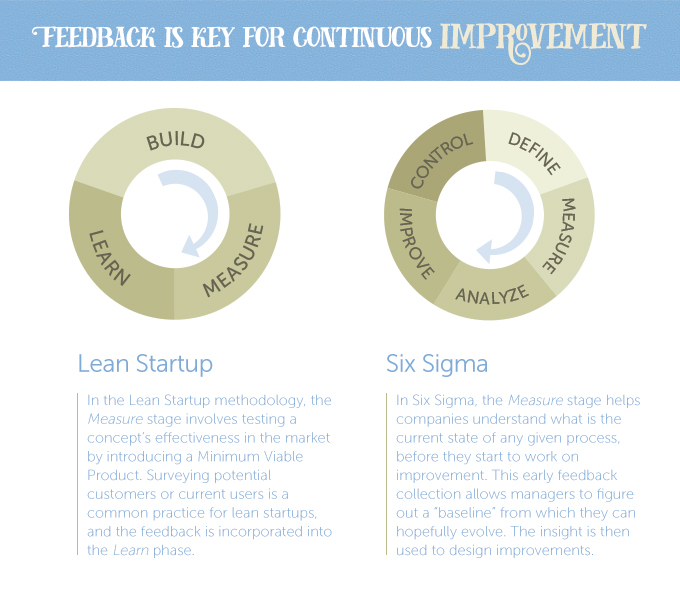
One day I found a different definition of feedback that radically transformed my career. It came from engineering, of all things. You see, as it turns out, feedback is actually a technical word to describe what happens when a system generates an output and there are improvements that could help increase production next time around the loop. Feedback is essential for continuous improvement, and methods like the Lean Startup and Six Sigma highlight how crucial it is to measure the quality of your output, listen to others’ evaluations, and learn from those to create increasingly stellar products.


Lean and Six Sigma


Feedback started making sense. Soon, I felt ready to not only receive it, but also actively seek it. It became clear to me: no lessons, no improvement. No outside opinions, no diverse approaches. No feedback, no innovation. Bingo. Feedback is creative fuel.


Why Is Feedback Important to Create Great Work?


3027135-inline-i-2-184-feature-inside-the-pixar-braintrust


Designers and agencies of all sizes recognize the importance of introducing feedback sessions to improve the quality of their work. Getting early responses to your product can minimize the risk of failure, overspending or overthinking. By testing the waters for potential issues, you are saving valuable time and effort in building unnecesary or unfitting features.


Ed Catmull, current president of Pixar Animation Studios, introduced the concept of a critique session called Braintrust in Creativity Inc. In his words, “candor could not be more crucial to our creative process. Why? Because early on, all of our movies suck”. Even established creative companies like Pixar open channels for discussion, straight talk, and criticism. Their Braintrust sessions are relentlessly candid, and involve different types of storytellers from diverse fields who sit down to critique an upcoming production. The Pixar team is a true believer in the “power of bracing, candid feedback and the iterative process—reworking, reworking, and reworking again, until a flawed story finds its through line or a hollow character finds its soul.”


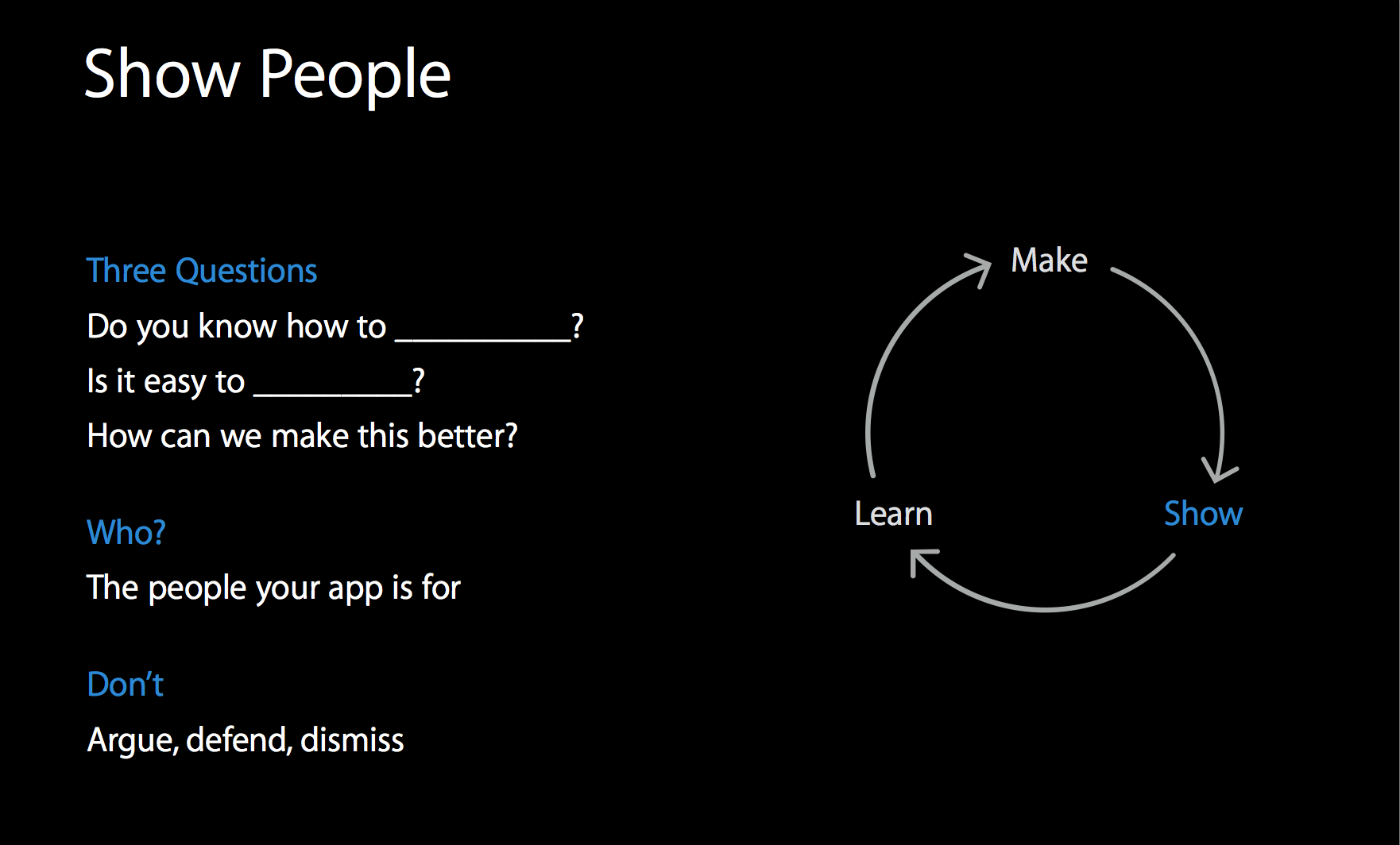
Similarly, designers at Apple revealed a process called “Fake It Till You Make It” (WWDC 2014) to elucidate how they come up with and refine app concepts. The three steps involved are Make, Show and Learn. “Show” is a crucial feedback session with potential users. When a concept is in the Show phase, designers will ask three essential questions:


  1. Do you know how to __________?

  2. Is it easy to _________?

  3. How can we make this better?

How can you use these questions to get feedback about your own work?


223_prototyping_fake_it_till_you_make_it_pdf-__attachment__page_67_of_382_
Download or stream the entire “Fake It Till You Make It” presentation here.


The Wrong Kind of Feedback


In the quest to find out if your work sucks, getting the right kind of feedback is crucial. Constructive, down-to-earth comments are hard to find, and the last people you’ll want to get them from are friends and family.


Think about it: these people are connected to you on a personal level. We’ve all blindly praised a relative or close friend in an effort to avoid confrontation or gain favor. Relying on feedback from people you have an emotional connection with can be misleading. When your career is on the line, it’s best to look elsewhere for honest feedback.


7 Ways To Get Feedback Now


These days, you don’t have to look very far to find out what people think about your work. In fact, you can get plenty of honest, useful feedback online. The following sites are a great place to start:


1. Dribbble


With nearly half a million designers on board, Dribbble has quickly become the go-to platform for uploading and reviewing creative work. Community members are active and often provide thoughtful feedback. If you’d like to mingle in person, we’ve partnered with Dribbble to organize hundreds of meetups all around the world. Check out this schedule for a meetup near you.


2. Hunie


Hunie is an online community where designers, founders and developers can connect to share design feedback. You can submit your work, receive constructive advice, and even develop mentorship relationships with other designers.


3. Criticue


The website is an online platform that allows businesses and web designers to quickly gather comments and feedback from other professionals in the industry. All reviews are carefully moderated so you don’t have to worry about spam or generic content.


4. Sitepoint


Around since 1999, Sitepoint Forums congregate thousands of passionate designers covering everything from business tips to UX design. The community currently supports different ways to ask for and provide feedback. If you’d like your site (or site concept) to be reviewed, tag your entry with “site-review” and post in the appropriate forum category. If you are looking for a code review, prefix the summary of your thread with [Code Review].


5. Behance


This social platform for designers includes a comment section for every project that you upload. With over 8 million projects uploaded, Behance is a unique space to share and discover creative work. Like Dribbble, Behance hosts local portfolio reviews where you can connect with peers over honest feedback. Check out upcoming events here.


6. Reddit


There’s a special subreddit for design critiques where participants are free to post their work in progress and comment on each others’ pieces.


7. Your own social networks


Social media groups can be a goldmine for honest feedback if you know where to look. Try to stick to professional social platforms like LinkedIn or credible Facebook design communities. Use online surveying tools like Pickfu to to collect comments easily.


Social media groups can be a goldmine for honest feedback if you know where to look. Like online communities, it’s recommended to stick to professional social platforms like LinkedIn or credible Facebook design communities.


Ripping Off the Band-Aid


There’s really no way to ease yourself into the process of receiving feedback. If you’re expecting a ton of reviews on your design, plot the comments on a spreadsheet and organize it later. Lastly, don’t forget to tune down your ego and emotions. Keep an open mind and the rest will follow.


Products Seen In This Post:


Share on PinterestShare on Pinterest


getpaidtowrite-banner
How to Find Out If Your Work Sucks

33 Reasons Work From Home Parents Are Tougher Than You Think

I work from home along with my husband. He’s a programmer and me, an organic web editor. We practice hands-on parenting with our two kids, a 6-year-old and a 7-month-old. Because my job allows me to work remotely, I do not have to (or get to) work from an office. I also cannot be a stay-at-home mom because well, I have two kids to feed. The only option left is to work from home, which isn’t as rosy as it sounds.


First of all, there is no office for me to hide away from diaper changes, milk feedings, questions about "how to be a princess" and "where do unicorns live". Due to my children’s regular attempts to get me fired, I bend and break so many HR rules, it’s a miracle I still have a job. My work schedule is such a mess, it shouldn’t be called a "schedule" and an abundance of my job is completed ad hoc.


Because my boss has a weird sense of humor, this post is going to shine the spotlight on my chaotic working environment. At the very least, it will take you inside what it’s like to be parents who try to juggle work and their children the way they know how. At the very best, it will give employers a good reason to cut us some slack and to have some faith in parents who choose to deliver results while working from home.


The Chaotic Life Of Work-From-Home Parents


Here’s an inside look at what working-from-home parents are up against (and some tips sprinkled here and there on how to cope).


1. You can throw “work-life balance” out the window because it means squat when you work from home with kids. Even if you can separate business from leisure, your kids can’t. They expect their parents to be available to them so long as they see them around.


2. You get interrupted and hence distracted a lot. And losing track of time becomes the norm. (Oh my Thor, is it Friday already?)


3. There is an unbelievably insane amount of things children need, from complicated tasks like help with their homework to simple things like brushing their teeth.


4. You cannot, under any circumstances, lose your temper. Being angry takes energy, which could be better used elsewhere.


5. You need a truck-load of patience because once you upset a child, you can kiss an hour of your life goodbye, trying to make her stop crying.


6. Try to not be too anxious about the time you are "wasting" waiting for your toddler to finish her broth or tie her shoe or go to sleep. I found staying calm allows you to last longer without breaking down.


7. Even if you are committed to deliver 8 hours a day to work, most of time you end up doing more, to make up for time lost to interruptions.


8. There is no distinction between weekdays and weekends anymore. It’s all a blur, unless you have something that breaks the monotony, like going to church or celebrating special holidays.


9. A majority of time is wasted looking for things: socks, trucks, pacifiers, milk bottles, the TV remote. The TV is the best invention ever. No, wait, the pacifier is.


10. You work in blocks of time because of interruptions. This means a lot of stop-and-go, and bookmarking is needed.


11. Before kids, a quiet house is when you can be most productive. Post-kids, when the house is quiet, you go into panic mode. “Where are the children?”


12. Stickie notes rule: you need to make notes for everything. It doesn’t matter if you use digital or paper notes. Just have them handy and nearby. Apologize to the fridge on a weekly basis.


IMAGE: designmom.com


13. You miss (not fondly) a lot of things like emails, calls, appointments (sometimes) and will need to apologize (often).


14. Expect plenty of rainchecks when it comes to appointments. Like they say, “sh*t happens”; sometimes with kids, that is literal.


15. You apologize a lot to your remote co-workers, and they make compromises for you too. “I have an hour before my kids wake up, we can talk like, right now.”


16. You love naptime: your own, and your kids’.


IMAGE: Pixabay


17. You’re always in a state of urgency – something needs to be done while your kids are napping. For me, it’s emails, spellcheck, a follow up with a writer, discussion for a new topic, and time’s up – they’re awake.


18. The house is always in a state of chaos because you can only clean up after the kids are asleep. Coincidentally, that’s also the time when you can do work that don’t appreciate interruptions, like write. #sophieschoice


19. Sleep is overrated. And your sleep debt is beyond replenishing. Sitting down initiates a nap (which I term “a crash” instead).


IMAGE: DanielleGuenther Photography


20. You take a lot of coffee. Then again, doesn’t everyone?


21. You roll your eyes when a friend who is single tells you they are tired from a gym session or because they didn’t get their full 8 hours of sleep last night.


22. You roll your eyes when someone offers you parenting advice that start with, “you should…”


23. Online shopping is possibly your favorite and only hobby. The toy section is your favorite category to spend hours on. Toys are the best invention ever.


24. You take entertainment where you can find them, because finding two hours of uninterrupted time to watch a movie is like finding Edward Snowden.


25. There is no such thing as a break. You fear weekends and school holidays but not as much as your child getting sick. Work comes to a halt when a child gets sick.


26. Watching the kids is a juggling act between you and your partner. To ensure World War 3 doesn’t happen, always offer, never assign. With a sick kid, both parents are needed to chip in. You might need to take leave from work.


IMAGE: DanielleGuenther Photography


27. Sometimes you feel like your partner is the kindest person in the world (for letting you sleep in), other times you want to murder them in their sleep (for saying things like, “your son is crying for milk again”.)


28. Even if your partner is okay with the idea of working and parenting simultaneously, other family members may have their own opinion. #tradition #itsthemothersjob


29. It’s not a sign of weakness to ask for help with your kids so you can take a short break from both them and work.


30. It is however a sign of weakness when you complain. Complaining weakens the resolve and makes you question your life decisions. You seriously don’t have time for that.


31. You need an extremely understanding and flexible boss. If you are a boss, and you have a work-from-home parent, be flexible.


32. The only way you can handle the needs of toddlers, babies and clients simultaneously, is to get everything done, one at a time.


IMAGE: Camilo Jimenez


33. If people don’t think you are crazy for wanting to be a work-from-home parent, you’re not doing it right. A good sense of humor goes a long way.


If things are so tough, why do it?


Many people would tell you that parenting is a big responsibility, what they fail to convey is how difficult, tiring and demanding this job is. Unlike a job job, you can’t clock out, you can’t protest, and you are at the mercy of your child’s pace (ever tried trying to make a child chew food faster?).


But here’s the thing. If having kids is in your family plan all this while, the first three years of a child’s life will be the ride of your life. The rate at which a child transforms from this small, fragile infant into a walking, talking, salivating machine (with boundless energy) all in 36 months is just amazing – and you’ll want to be around to see that and be a part of it.


Because, in case you forget, there is no rewind button.


IMAGE: nspcc.org.uk


Employers, Should You Hire A Work-From-Home Parent?


This revelation of how things are like for a work-from-home parent may put us parents at a disadvantage. While household conditions may vary and some parents cope better than others, all I can say is that we do have some strengths to offer:


We are pretty good at foreseeing the future (and what can possibly go wrong).


We are paranoid and thus are proactively prepared for the worst.


We are also pretty good working in the midst of chaos, stress, fatigue and conflicting priorities.


We are used to doing things in a way that is not because we want to but because we have to.


Most of all, we get things done. Family isn’t secondary to our work, they are the reason why we work, and there are few other motivations that are as, or more, powerful than that.


33 Reasons Work From Home Parents Are Tougher Than You Think

33 Reasons Work From Home Parents Are Tougher Than You Think

I work from home along with my husband. He’s a programmer and me, an organic web editor. We practice hands-on parenting with our two kids, a 6-year-old and a 7-month-old. Because my job allows me to work remotely, I do not have to (or get to) work from an office. I also cannot be a stay-at-home mom because well, I have two kids to feed. The only option left is to work from home, which isn’t as rosy as it sounds.


First of all, there is no office for me to hide away from diaper changes, milk feedings, questions about "how to be a princess" and "where do unicorns live". Due to my children’s regular attempts to get me fired, I bend and break so many HR rules, it’s a miracle I still have a job. My work schedule is such a mess, it shouldn’t be called a "schedule" and an abundance of my job is completed ad hoc.


Because my boss has a weird sense of humor, this post is going to shine the spotlight on my chaotic working environment. At the very least, it will take you inside what it’s like to be parents who try to juggle work and their children the way they know how. At the very best, it will give employers a good reason to cut us some slack and to have some faith in parents who choose to deliver results while working from home.


The Chaotic Life Of Work-From-Home Parents


Here’s an inside look at what working-from-home parents are up against (and some tips sprinkled here and there on how to cope).


1. You can throw “work-life balance” out the window because it means squat when you work from home with kids. Even if you can separate business from leisure, your kids can’t. They expect their parents to be available to them so long as they see them around.


2. You get interrupted and hence distracted a lot. And losing track of time becomes the norm. (Oh my Thor, is it Friday already?)


3. There is an unbelievably insane amount of things children need, from complicated tasks like help with their homework to simple things like brushing their teeth.


4. You cannot, under any circumstances, lose your temper. Being angry takes energy, which could be better used elsewhere.


5. You need a truck-load of patience because once you upset a child, you can kiss an hour of your life goodbye, trying to make her stop crying.


6. Try to not be too anxious about the time you are "wasting" waiting for your toddler to finish her broth or tie her shoe or go to sleep. I found staying calm allows you to last longer without breaking down.


7. Even if you are committed to deliver 8 hours a day to work, most of time you end up doing more, to make up for time lost to interruptions.


8. There is no distinction between weekdays and weekends anymore. It’s all a blur, unless you have something that breaks the monotony, like going to church or celebrating special holidays.


9. A majority of time is wasted looking for things: socks, trucks, pacifiers, milk bottles, the TV remote. The TV is the best invention ever. No, wait, the pacifier is.


10. You work in blocks of time because of interruptions. This means a lot of stop-and-go, and bookmarking is needed.


11. Before kids, a quiet house is when you can be most productive. Post-kids, when the house is quiet, you go into panic mode. “Where are the children?”


12. Stickie notes rule: you need to make notes for everything. It doesn’t matter if you use digital or paper notes. Just have them handy and nearby. Apologize to the fridge on a weekly basis.


IMAGE: designmom.com


13. You miss (not fondly) a lot of things like emails, calls, appointments (sometimes) and will need to apologize (often).


14. Expect plenty of rainchecks when it comes to appointments. Like they say, “sh*t happens”; sometimes with kids, that is literal.


15. You apologize a lot to your remote co-workers, and they make compromises for you too. “I have an hour before my kids wake up, we can talk like, right now.”


16. You love naptime: your own, and your kids’.


IMAGE: Pixabay


17. You’re always in a state of urgency – something needs to be done while your kids are napping. For me, it’s emails, spellcheck, a follow up with a writer, discussion for a new topic, and time’s up – they’re awake.


18. The house is always in a state of chaos because you can only clean up after the kids are asleep. Coincidentally, that’s also the time when you can do work that don’t appreciate interruptions, like write. #sophieschoice


19. Sleep is overrated. And your sleep debt is beyond replenishing. Sitting down initiates a nap (which I term “a crash” instead).


IMAGE: DanielleGuenther Photography


20. You take a lot of coffee. Then again, doesn’t everyone?


21. You roll your eyes when a friend who is single tells you they are tired from a gym session or because they didn’t get their full 8 hours of sleep last night.


22. You roll your eyes when someone offers you parenting advice that start with, “you should…”


23. Online shopping is possibly your favorite and only hobby. The toy section is your favorite category to spend hours on. Toys are the best invention ever.


24. You take entertainment where you can find them, because finding two hours of uninterrupted time to watch a movie is like finding Edward Snowden.


25. There is no such thing as a break. You fear weekends and school holidays but not as much as your child getting sick. Work comes to a halt when a child gets sick.


26. Watching the kids is a juggling act between you and your partner. To ensure World War 3 doesn’t happen, always offer, never assign. With a sick kid, both parents are needed to chip in. You might need to take leave from work.


IMAGE: DanielleGuenther Photography


27. Sometimes you feel like your partner is the kindest person in the world (for letting you sleep in), other times you want to murder them in their sleep (for saying things like, “your son is crying for milk again”.)


28. Even if your partner is okay with the idea of working and parenting simultaneously, other family members may have their own opinion. #tradition #itsthemothersjob


29. It’s not a sign of weakness to ask for help with your kids so you can take a short break from both them and work.


30. It is however a sign of weakness when you complain. Complaining weakens the resolve and makes you question your life decisions. You seriously don’t have time for that.


31. You need an extremely understanding and flexible boss. If you are a boss, and you have a work-from-home parent, be flexible.


32. The only way you can handle the needs of toddlers, babies and clients simultaneously, is to get everything done, one at a time.


IMAGE: Camilo Jimenez


33. If people don’t think you are crazy for wanting to be a work-from-home parent, you’re not doing it right. A good sense of humor goes a long way.


If things are so tough, why do it?


Many people would tell you that parenting is a big responsibility, what they fail to convey is how difficult, tiring and demanding this job is. Unlike a job job, you can’t clock out, you can’t protest, and you are at the mercy of your child’s pace (ever tried trying to make a child chew food faster?).


But here’s the thing. If having kids is in your family plan all this while, the first three years of a child’s life will be the ride of your life. The rate at which a child transforms from this small, fragile infant into a walking, talking, salivating machine (with boundless energy) all in 36 months is just amazing – and you’ll want to be around to see that and be a part of it.


Because, in case you forget, there is no rewind button.


IMAGE: nspcc.org.uk


Employers, Should You Hire A Work-From-Home Parent?


This revelation of how things are like for a work-from-home parent may put us parents at a disadvantage. While household conditions may vary and some parents cope better than others, all I can say is that we do have some strengths to offer:


We are pretty good at foreseeing the future (and what can possibly go wrong).


We are paranoid and thus are proactively prepared for the worst.


We are also pretty good working in the midst of chaos, stress, fatigue and conflicting priorities.


We are used to doing things in a way that is not because we want to but because we have to.


Most of all, we get things done. Family isn’t secondary to our work, they are the reason why we work, and there are few other motivations that are as, or more, powerful than that.


33 Reasons Work From Home Parents Are Tougher Than You Think

Thursday, March 19, 2015

5 Forward-Thinking Tech Companies That Love Remote Work

Tech companies are embracing the idea of working remotely. Companies are realizing that it is a great way to cut down on overhead costs and take advantage of talent that might not exist in the same area code. With all the new technologies and apps available to startups, working remotely is easier and more effective than ever. Here are five forward-thinking tech companies that really love remote work:


1. Basecamp


The team at Basecamp (formerly 37Signals) created the project management app by the same name and the Ruby on Rails programming language. Dave Heinemeier Hansson, one of the partners, says that they are big supporters of working remotely and have been doing so for the last decade. In fact, he claims that 75% of the Basecamp team is working remotely. Their experiences led him and his co-founder to write a book titled REMOTE: Office Not Required about how employees and employers “can work together, remotely, from any desk, in any space, in any place, anytime, anywhere.” This video offers a great introduction to some of the remote workers in the Basecamp team and how they manage working outside of an office.


2. Treehouse


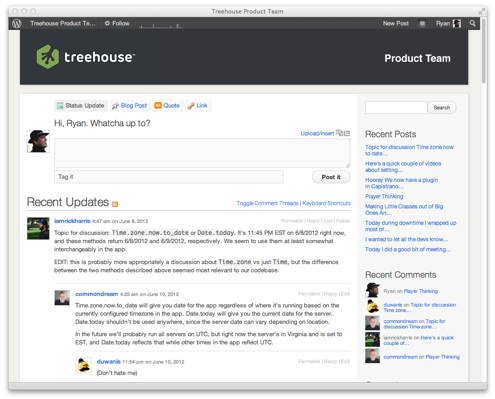
Treehouse is a fantastic resource for anyone interested in learning about HTML, CSS, iPhone apps, and web development in general. The company is hugely supportive of a work-from-home culture, and co-founder Ryan Carson has made it a priority to make remote work part of the company-wide goals and mission. Treehouse schedules company-wide meetings once a year where their 70 full-time employees and student interns get together to hang out and get to know each other. The team schedules monthly 15-minute videos where each member talks about big-picture ideas in the company, helping align everyone’s goals to the company’s mission. Treehouse employees use project management tools like Flow, Convoy and HipChat to stay integrated and decide how best to spend their time every day.


tumblr_m5ggoghlgt1rneiz8


3. WordPress (Automattic)


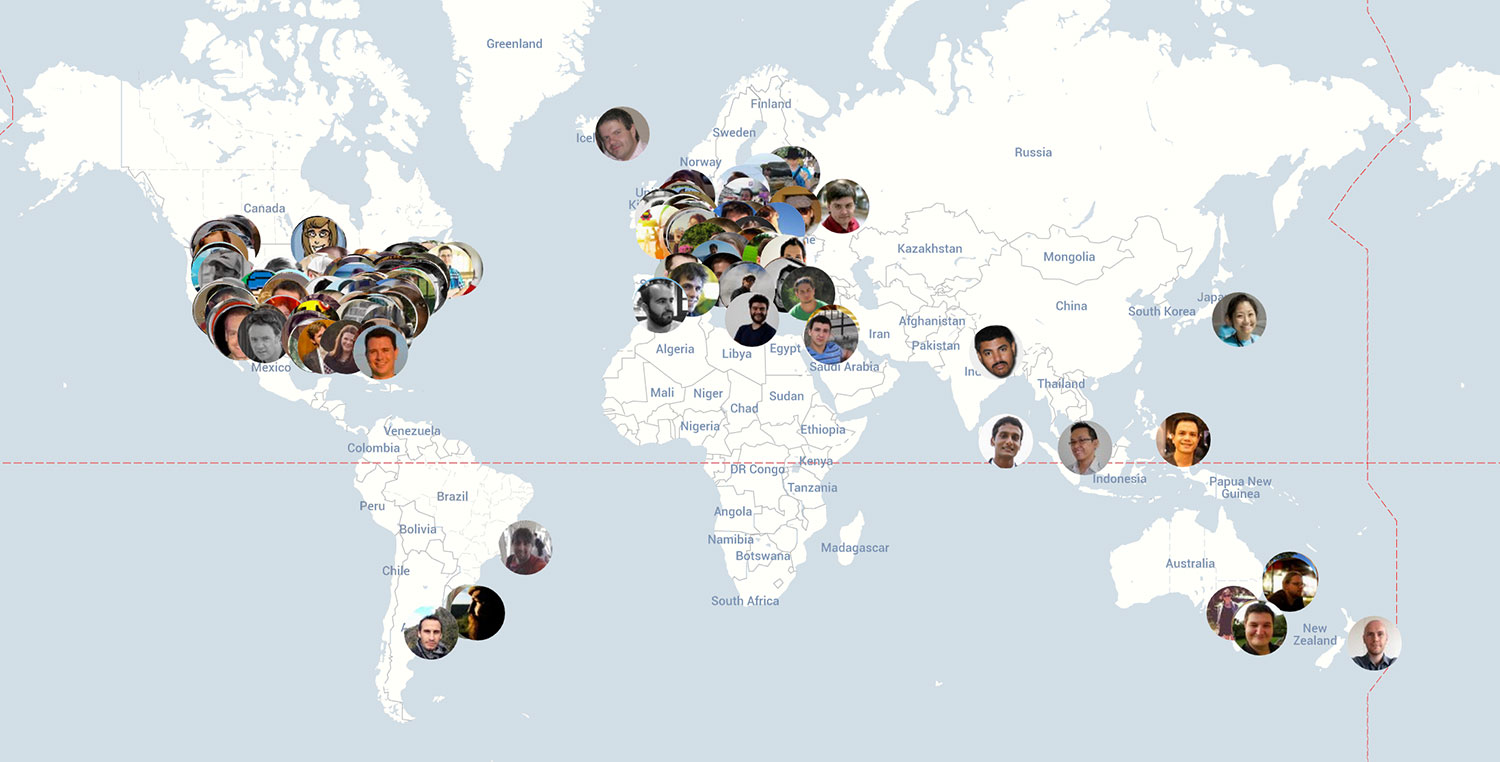
WordPress CEO Matt Mullenweg manages a global workforce of 260 people and decided that having an office is not the best way to run a successful company. He believes that the best way to gain access to the best engineering talent in the world is to have a distributed workforce. WordPress employees communicate with each other using P2, Google Hangouts and other online communication platforms. They organize team meetings every few months in a city of their choosing, using the funds that would otherwise be allocated to run a traditional office.


Automattic_Map

The Automattic team updates this world map with every member’s current location


4. Mozilla


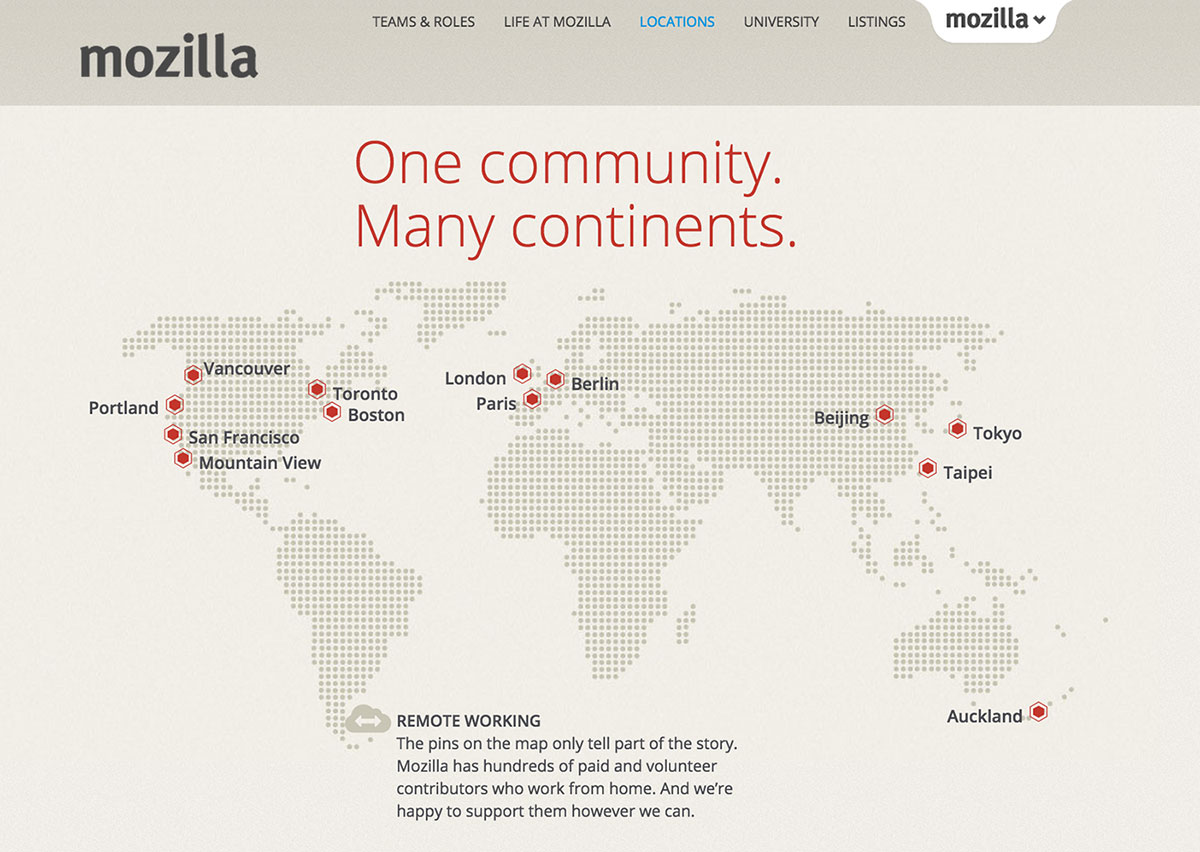
Mozilla is also big on the remote working culture. To them, forcing remote employees into an office is counter intuitive and counter productive. CEO Brian Bondy keeps his employees in the loop by encouraging them to simply call a meeting anytime they have anything to discuss. As in other remote-friendly tech companies, there are specific weeks where employees are flown in to meet in person. All of the company’s paperwork and operational material is completely transparent and available to every employee online.


mozilla


5. Buffer


Buffer has been on the remote work train since the company’s inception. Employees stay productive and on track by using apps like HipChat for communication, Sqwiggle for face-to-face contact, Hackpad for collaborating on documents and in-person get-togethers to connect as a team. When they do meet up, they don’t just stick to an office either. Buffer schedules retreats in fascinating places like Cape Town where work can blend with a little sightseeing, boating and safari action.


In this video Joel & Leo from Buffer discuss why they decided to be a remote team and some of the tools that help them collaborate:


These companies, and many others, are proving how remote work is a truly innovative option to keep employees happy, teams productive, and business successful. Some of our own team members are also working from remote locations, and we couldn’t be happier to collaborate with such talented individuals from anywhere their desk might be.


Products Seen In This Post:


Share on PinterestShare on Pinterest


getpaidtowrite-banner
5 Forward-Thinking Tech Companies That Love Remote Work

Tuesday, March 17, 2015

Including Your Personal Passions in Your Design Work


Anyone here have a bunch of strange, unusual, or, shall we say, “quirky” hobbies? Perhaps you like to collect bottle caps from around the world and photograph them as found typography. Or maybe you recycle old computer parts to fashion into handmade art pieces? Come on, you’re designers – I know there’s something juicy you work on when you’re not putting your nose to the old grindstone!


Binary Low Table
Binary Low Table by BRC Designs.


If you do, excellent! If you don’t, you should really find something to do and share with others. Personal projects are not only fun and inspiring to you – they can also have the same effect on your paying clients. Having interesting side projects in your portfolio can help you make the leap from forgettable, all-purpose designer to industry superstar.


Charting A Course For Future Success


By having interesting personal work, you’re not just relieving stress or pursuing an oddball passion. You’re setting a path for your entire career. Think about it: if your career as a freelancer is focused simply on just getting your next paycheck, you’re missing out on 99% of what’s possible as a design professional. Ask yourself what you really want to accomplish in the design world. Setting high goals for yourself includes taking your personal passions into account.


One hundred dollars in the back pocket of your jeans
Image Source: Back pocket of your jeans via Shutterstock.


A great way to determine what your real career goals are is to play what I like to call the “so that” game. For example: you’d like to build up your portfolio so that you will be more attractive to higher quality clients. And you’d like to attract higher quality clients so that you can network your way to a high-profile assignment. So that you can wear a jewel-studded crown and have crowds of people in togas lavishing you with adulation…


Wait… that may have been a dream I had once!


You want more high-profile assignments so that you can have a bunch of people in turtlenecks clamoring to see your work at a gallery show. There; that sounds more like a designer’s life. Once you run out of “so thats,” that’s when you’ve arrived at your true goal. In case you couldn’t tell, this can be pretty lofty. Perhaps your final “so that” is to change the world, or give back to your community, or even to be the best possible creative person you can possibly be. Knowing the true reason why you’re doing all of this can help keep you on track when things get tough.


More Creativity Attracts More Creative Work


There are thousands of potential clients out there who you could be working for. How many of them do you need to make an impression on in order to have an amazingly successful career? The answer may surprise you – it’s a lot fewer than you think.


Your ideal clients are special individuals who are looking for uniqueness, not commodity. The main thought that goes through a design client’s head, if they’re at all savvy about design (and thus someone you want to work with) is: I wonder if I will be surprised today? Usually the answer is no; most design portfolios, unfortunately, bring more of the same ho-hum boring stuff day in and day out.


explosion of Creativity
Image Source: Creativity via Shutterstock.


The reason for that is not because most designers are just that uncreative. Most people are capable of far more creativity than they allow themselves to get away with – because they are concerned with making a “good impression.” Well, when you’re a creative freelancer, the last thing you want to do is try to make a “good impression” by being less creative.


People are often afraid to put too much of themselves in their professional work, but as you’ll see, I believe this is a mistake. I’ve never had a problem displaying “too much” personality in my approach to a professional project. In fact, it’s been just the opposite – my clients greatly appreciated my unique perspective and loved the response my work got from their customers. In much the same way, I love it when I hire a designer who can complement my weirdness with their weirdness. We can have a big old weirdo party and make our customers deliriously happy.


What They See Is What You Get


Your potential clients can only judge you as a designer by what you show them. If the only thing in your portfolio is bland, boring work that you only took to pay the bills, that will profoundly affect how you will be approached and what kind of work you will be offered.


No one offers an exciting, once in a lifetime assignment to someone they don’t trust to put their heart and soul into it. Think about it – if I’m a high profile client in the market for a star designer, who do you think I’m going to choose: the technically good but bland designer who only has one size fits all solutions to show me? Or the maverick designer who shows me their brilliant creativity in the form of a compelling personal project? If you only show ‘meh’ work, you’ll only get more of that ‘meh’ work. So embrace your crazy side and make time to work on something awesome.


In Conclusion


Your portfolio is a chance to tell your personal story. Aim to take people on an emotional roller coaster ride whenever they see your work. Yes, it’s important to display your competence, but 90% of design is knowing how to think, not how to do technical stuff.


Of course you need to be able to do the technical stuff too, but that’s what’s called a “minimum requirement.” If I’m a highly desirable client, I’m not going to stop and think about whether or not you have the skills for the job. I already assume you have them, and if you don’t, I’m not even going to consider hiring you. What clients are interested in is whether or not your brain is on. If it is, they’ll be able to see that in your work.


What Do You Think?


Do you have any interesting personal projects you could show to potential clients? Have you ever gotten better quality work on the strength of your personal interests? Let us know below.


The post Including Your Personal Passions in Your Design Work appeared first on Speckyboy Web Design Magazine.


Including Your Personal Passions in Your Design Work