Showing posts with label School. Show all posts

Thursday, June 18, 2015

How to Become a Graphic Designer Without Going to School

A good design school will absolutely get you on the right track to becoming a talented, qualified professional. However, it’s simply not in the cards for everyone. Fortunately, you can still fulfill your dream of becoming a designer without a formal education, as long as you have the drive and dedication to pull it off.


Design School: Important or Not?


Design School


As far as the design industry is concerned, the debate rages on. You can’t really blame people for thinking that design school is not really as important as the industry makes it out to be. After all, the most important aspect of creating fantastic design is creativity, something that people are born with and develop through time, and not something you learn from textbooks and modules.


But then again, your creativity alone will not really get you anywhere if you don’t know the basics of design. No matter how unique your concepts are, you would also have to present them in the most professional way possible, especially if you want to make a serious career out of it. This is where the value of proper design education comes in. It teaches you the basics and the ins and outs of every possible tool and theory that you will need to progress in the specific niche you want to concentrate on.


Design School Drawbacks


The drawback to design school? It’s pretty simple. Not only does it cost a fortune to go to design school, it also takes up at least four years of your life. This is something that is just not possible for many people, especially if they don’t have the financial capacity. A lot of kids have to start working the moment they reach legal age, so how can they keep their heads above water in the short term without having to sacrifice their long-term dream?


Meet Karen X. Cheng


People who frequent YouTube will probably remember Karen Cheng as the girl who taught herself how to dance in just 365 days. The video she made out of the entire experience was truly inspiring, causing it to go viral online.


But for those in the field of design, Karen Cheng is the former Lead Designer at Exec. And yes, she never went to design school. In a recent Quora post, she shared her story.


“I didn’t have four years and 0,000 to go to design school,” she says. Did this stop her from becoming a designer? No, it didn’t. And to add an even bigger load of surprises, she admits that she has no discipline.


“People thought I have discipline because I was able to teach myself how to dance in just 365 days,” she states in an interview, “The truth is, I don’t have discipline. It’s just that I loved dance, I just did what I love.”


This is exactly what Karen advises to people who want to do the same groundbreaking accomplishments that she had. Do what you love.


She had been working on Microsoft Excel for two years when she realized that this was not what she wanted to do for the rest of her life. She knew that she was meant to do something else. This is what made her think about moving into a different industry. This is what got her started in the field of design.


“I had no design-related skills. I did not want to go back to school.”


For Karen though, that was not a problem at all. She would breeze through her day job and rush home, and devour material that allowed her to learn more about the basics of design. She put together her own curriculum, covering everything that she felt she needed to learn in a span of six months.


Just like that, she plunged into the job market, now as a designer. Of course, it wasn’t easy. She did not have as much training as the other people who were eyeing the same positions she wanted, and she definitely did not have relevant experience. But she didn’t give up. She decided to find ways to set herself apart from everybody else. That’s how she got the job as a designer at Exec, and from there, went on to lead the entire design team.


Inspired by Karen Cheng’s story? Well, you know that if Karen did it, then you also can. You just need to get started and start grabbing opportunities that not a lot of people would take.


Here are a few steps that could help you get started and inch closer to your dream:


Building Your Foundation


Building a Foundation


At first, Karen was probably not as good as those people who went through four years of design education. But she still did her job well enough to take her places in the industry. She just had to learn how to start.


Her biggest mistake? Jumping straight into Photoshop. Just because you buy a paint brush does not mean that you’re already an artist. You have to start with the basics. And for a career in design, you have to start from scratch.


  • Learn how to draw first. You don’t even have to enroll in an art class. Karen recommends the book You Can Draw in 30 Days. Allot at least 30 minutes of every day for a month just trying to draw. Once you’ve learned the basics and have given your hands used to the daily workout, move on to the next step.

  • Learn graphic design theory. The book Picture This is what Karen recommends when you get to this step. It gives you the basics of typography, color, and designing with a grid.

  • Next, you must learn a few basics in user experience. Some books that Karen recommends are Don’t Make Me Think and The Design of Everyday Things.

  • Text also plays a huge role in design, so you should also learn how to write. You’ll see mockups using the standard Lorem Ipsum text, but you have to be creative in every aspect. Get a feel for words. Give the audience the entire package by showing them the emotions they’re supposed to fell not just through the graphics, but through the words you use as well. Try visiting the website Voice and Tone, it should give you great tips on how to talk to your audience.

  • Lastly, learn how to slaughter your work. This is one basic reality about design that a lot of rookies fail to get. When one design does not work, get rid of it and start anew. Don’t waste your creative juices by trying to improve something that’s not all that. Just let go of it and create something fresh and completely different.

These should pretty much sum up the foundation-building part of your training. Now that you’re equipped with the basics, it’s time to move on to more complicated things.


Mastering the Software


Mastering-the-Programs


You don’t think you could escape those computer programs, could you? Even if you want to go old school and would like to create things by hand, you can never deny the fact that the entire world has gone digital. Therefore, you also have to be prepared to create work digitally.


  • Adobe Illustrator. Yes, it’s still not time to learn Photoshop yet. Better start with Illustrator first. You’ll find so many video tutorials online, and you can also try out a few textbooks. Adobe Illustrator Classroom in a Book has all the basics, and going through the first half of it could give you pretty much everything that you need to know.

  • Adobe Photoshop. Finally, it’s time for you to learn how to Photoshop. Again, you can find so many tutorials online, but make sure you choose only the best. Try to find stuff from PSDTuts and TutsPlus. They have great tips that are easy to understand and could really help you master the craft of Photoshopping.

There are so many other design programs out there, but these are two of the most popular. You can try to learn the other programs one by one as the need arises. For instance, if you’re going to do any print design, you’ll definitely need to learn Adobe InDesign.


Finding Your Specialty


Finding-Your-Specialty


As a design guru, you have to figure out what you want to specialize in. You don’t want to be the jack-of-all-trades when it comes to design, you want to be the master of a specific niche. You have to choose one area for you to focus on so that you could have a clearer path set out for you, especially when it comes to figuring out the next few steps that you’re going to take.


  • Logo Design. Interested in building logos for a brand? This is a great choice. If you think that all there is to logo design is the logo itself, you are greatly mistaken. Most of the time, a designer is signed on board to create not just a logo, but an entire brand identity. This means that you would also have to imagine that logo on a wall, on an office door, on a piece of stationery, and everything else that comes with it.

  • Hand Lettering. If you enjoy hand lettering there is alot of demand for it right now. People are in love with hand crafted and personalized designs. Why? Because it brings a human element to design. In today’s digital world brands are seeking a hand-made aesthetic. You can find great hand lettering courses on Skillshare.com, Seanwes.com, Youtube.com, and Lynda.com.

  • Mobile App Design. Mobile apps are obviously very much in demand, but you also have to be ready for a lot of competition. Tapworthy is one book that you may want to go through should you want to concentrate on this niche.

  • Web Design. Obviously, this is one of the popular choices when it comes to specialization. Try reading The Principles of Beautiful Web Design as it has all the basics you need. Feel free to jump from one website to another as well, taking note of the design aspects that you like the most about each website you see.

From here, it’s so easy to start building your own portfolio. Start out with a few concepts and then bring them to life. Find friends who may be needing your services, and try to pitch some of your ideas. Mind you, the first few attempts at trying to get your first clients would be challenging. But once you make the first one happy, everything else will just fall into place.


Start Your New Career Right Now


Before I let you go, I would like for you to take a look at these important bullet points. Everybody loves bullet points, right?


  • Always Be Creating. Experience is very important. Nobody will want to hire you without it. Use your free time to create, learn, and educate yourself. Find tutorials, try different side projects, and focus on creating a large quantity of work.

  • Be Exceptional. Do something that separates you from the crowd. Find a niche or come up with a unique idea that will make you a hot commodity. A good example of this is Sean McCabe. During his free time he really enjoyed hand lettering. He started posting his work on Dribbble, Twitter, and Instagram. People took notice and now he is known as the hand lettering guy among the design community. Even though there are hundreds, if not thousands, of talented hand lettering artists out there, he comes to mind first.

  • Learn the business of design. If you’re planning on taking the freelance route, you should learn some basic business principles. You should focus on learning client negotiation skills, how to create a proposal or design brief, how to price your work, how to write a contract, how to track your time, and how to invoice your client in a professional manner.


How to Become a Graphic Designer Without Going to School

Friday, May 8, 2015

10 Things I Should"ve Learned In Business School, But Didn"t

Think back to graduation day. You felt on top of the world. You survived all the cramming, testing, terrible group projects, and pop quizzes they could throw at you. You were officially prepared to take on the world. Then graduation day ended and you realized that college and the working world aren’t exactly the same thing. In fact, there’s a ton of really basic stuff that you feel like you should’ve learned, but was never even mentioned in any class.


The College Bashing Trend


I’ll start this conversation by fully admitting that posts/books/videos on this theme are a bit of a trend. Here are just a few I found in a quick search:


Having read and watched these, I wanted to throw my own experience into the mix. I’ll be the first to say that I learned a ton in college. I really value my education and wouldn’t trade it for anything. But there are some very specific things that, looking back, I feel were a bit lacking. So here are the ten things I personally believe that I should’ve learned in business school, but didn’t.


1. How Taxes Work


whatIdidntLearn-2


In my finance classes, we briefly covered taxes, but holy crap, I was not prepared for how insanely complicated they would be. When you have a normal full-time job, everything is fine. Fill out your 1040EZ and you’re ready to go. But then you decide to work on your own and become a sole proprietor, and things get crazy fast. Now you’re deducting business expenses, paying new fees that you’ve never even heard of, and trying your best not to break any laws you don’t know about. Finally, you get organized and start your very own LLC. I literally have a huge book of paperwork that was involved in this process. It’s enormous, and I have no clue what any of it is for. Not one page.


The most important thing I learned? Get an affordable accountant. The piece of mind that I have about not going to prison for screwing up is worth every cent I pay my accountant. I know I’ll get plenty of comments about how “easy” it all is and how I’m throwing away my money paying someone else to do it, but when tax season comes and all I have to do is show up and sign a few documents, I couldn’t be more thrilled.


2. How Startup Funding Works


Bootstrap vs. fundraising, angel investors, VCs, series A vs. series B, seed funding; huh? What’s a Y Combinator and why do I need one?


In business school, we may have skimmed some of these topics, but as soon as I started working with Silicon Valley startups, I realized that they had their own finance language and I didn’t understand a word of it.


And speaking of different languages…


3. A Foreign Language


whatIdidntLearn-3


I received a degree in marketing and global business management. I spent countless hours learning about business customs and norms in foreign countries. This knowledge proved to be invaluable as I would go on to lead diverse teams of people from almost every continent. However, I’m still amazed that there were zero foreign language requirements in a global business program. I received my degree without taking a single foreign language class. When you work with people from all around the world who are each fluent in at least 2-5 different languages, you realize how much we tend to suck at this in the United States.


If you’re thinking about next semester and which electives you should take, for crying out loud, pass up the class on Renaissance painters and learn some Spanish.


4. How To Handle Failure


I feel like business schools should pick a random class for every student, wait until the end of the semester, and fail them after they’re finished with their huge term project, even if they did great on it. This is what real life is like.


I’m kidding of course, but the lesson I’m driving at is an important one. Sometimes you do all you can to make something work, and it just doesn’t. It sucks, and few are remotely prepared for it the first time it happens.


5. Passive Income is Awesome


Some of the shop owners on this very site will earn thousands of dollars tonight while they sleep. They created digital products that can be downloaded an infinite number of times without ever running into supply constraints. Rather than working for 40 hours and getting paid for 40 hours, these geniuses work for 40 hours, then make money from that work for years to come.


I don’t remember hearing about these people in school (granted, it was quite a few years ago now). There should be entire classes on passive income strategies and techniques. Heck, you should be able to major in it. The Internet has turned what used to be an idea that existed mainly in mail-order scams into a reality for countless hardworking people all over the world.


6. No One Cares About Your Grades at a Job Interview


This one really bugs me, but it has proved true. I aced college. I showed up early to every class, literally never missed a single lecture in four years (ok, five), and got an A in every course I ever enrolled in. Summa cum laude FTW! At graduation, I had these fancy ropes around my neck (honor cords) that most other people didn’t. I was clearly superior. Graduation was the one and only time that ever mattered.


It turns out, those guys and girls sitting next to me who didn’t study all weekend, who totally phoned in their finals and mid-terms, yeah, they graduated too. And got great jobs. I’m not saying you shouldn’t try hard in college, just remember that a B isn’t the end of the world.


7. Modern Marketing Techniques


whatIdidntLearn-1


I majored in marketing at a terrible time. The world was changing, and as always, universities were way behind the curve. I remember evaluating newspaper ads in class, then checking my Facebook in the library as soon as class was over. There was obviously a huge disconnect between how marketing was being taught, and how it was happening in the real world.


I never learned how to create a Google AdWords campaign, or how great free content can earn clicks and drive user acquisition. Sure, the core principles understanding basic human needs (thanks Maslow) are exactly the same, but the practical skill application is very different in a world gone digital.


8. Work/Life Balance


In business school, we talked about business. How to identify your target market, how to appeal to customers who don’t need or want your product, how to open up shop in a land that’s entirely foreign to you, but we never talked about how an endless pursuit of success can kill you. Or how sometimes you have to tell your client that you can’t perform last minute revisions on the project this weekend because you promised your family that you’d be around for once.


I learned how to balance work and life the hard way, as a newlywed freelancer, working a million hours a week. I burned out, hard. I loved my work and hated it all at the same time. I missed my wife and was tired of telling her that I was going to pull another twelve hour Saturday. Eventually, I figured out my priorities, and eight awesome years of marriage later, I now gladly shut my laptop at 5pm and enjoy most evenings the way the good Lord intended: with my wife and Netflix.


9. Outsource The Things You Suck at Doing


In college, you learn so many different skills, even within a given major. Sometimes the goal seems to be to make you a jack-of-all-trades. I carried that mindset into my professional life. I’m decent at writing, coding, design, photography, you name it. I’m not sure I’m amazing at any of these things, but I can get by.


The really hard lesson was that there are things that I really suck at, and rather than spending my time trying to master them, I’m often better off outsourcing them. This is why I pay that accountant I mentioned above. Is tax law really beyond my mental capacity? No, but I’m not interested in it in the least and would rather spend my days figuring out how to write better CSS or take better photos. And that’s ok! It turns out I don’t have to know everything.


10. Everything In The Book “Rework”


Rework, by Jason Fried and David Heinemeier Hansson, wasn’t merely a book full of things I didn’t learn in business school, it felt like a direct assault on everything I was taught. And I loved it.


whatIdidntLearn-1


Jason Fried has now become famous for pushing crazy ideas like how growth isn’t as important for your business as you think, how meetings are often a productivity-sucking waste of time, and how it doesn’t really make sense to force your workers to come to an office and sit in the same room every day. Depending on the type of person you are, you’ll either love Rework or hate it. Either way, you should definitely read it.


How About You?


Now that you’ve read my rant, it’s your turn. Leave a comment below and let us know which valuable life skills you wish you’d learned in school.


Products Seen In This Post:


getpaidtowrite-banner
10 Things I Should"ve Learned In Business School, But Didn"t

Thursday, December 4, 2014

7UP"s New Logo Goes Old School

7UP, your favorite “uncola,” has renewed its branding with new logo and packaging web design Singapores. We’ll take a quick look at the new web design Singapore and turn the conversation back to you to see what you think.


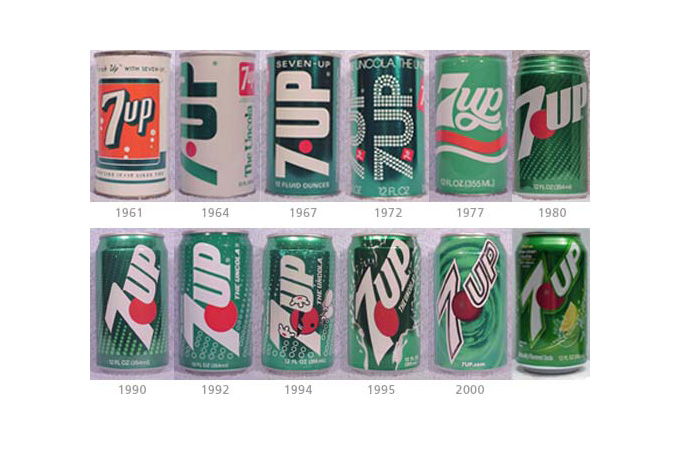
7UP Logo History


7UP is by no means a newcomer in the soft drink game. The 7UP brand launched way back in 1936! In fact, it’s even older than that. The same drink existed under another name, Bib-Label Lithiated Lemon-Lime Soda, from 1929 to 1936 (good call on the name change).


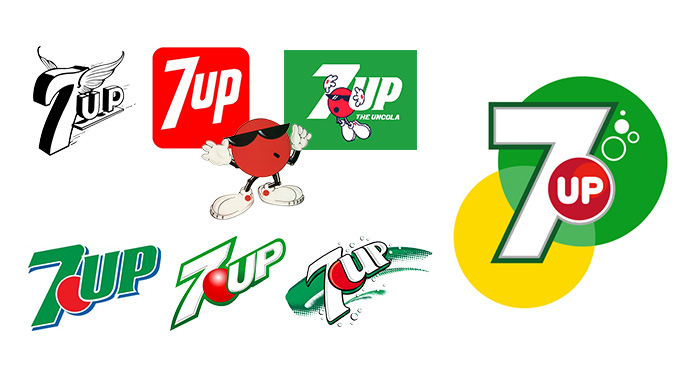
Since 1936, 7UP has gone through countless bottle/can/logo redesigns and advertising campaigns. As opposed to Coca-Cola, which has retained a remarkable degree of consistency over the years, 7UP seems to be constantly reinventing its image.


new-7up-logo
new-7up-logo
new-7up-logo


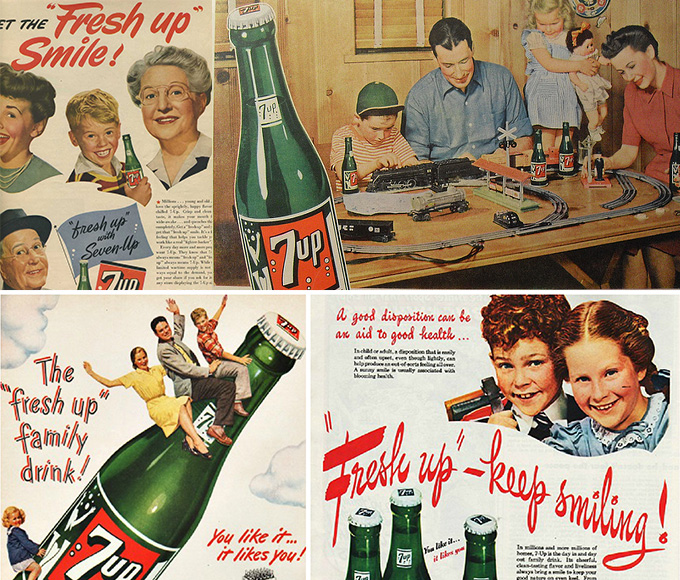
When I was a kid, “Spot” (the mischievous red dot mascot), was a primary feature of 7UP advertising. Remember this ad?


The 2014 7UP Logo


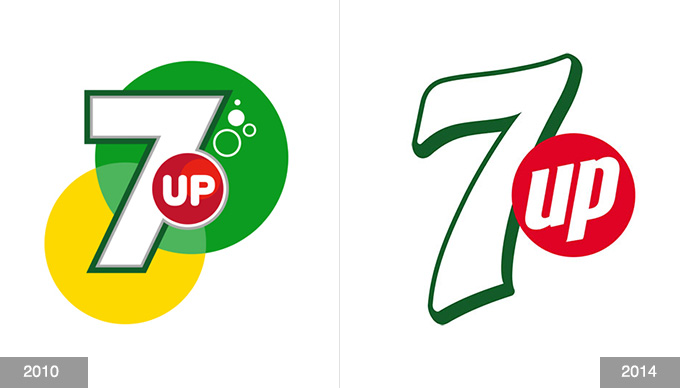
The 2010 iteration of the 7UP logo was colorful, fun, and fruity, an obvious attempt to modernize the branding. For 2014, they’re running in the complete opposite direction.


new-7up-logo
new-7up-logo


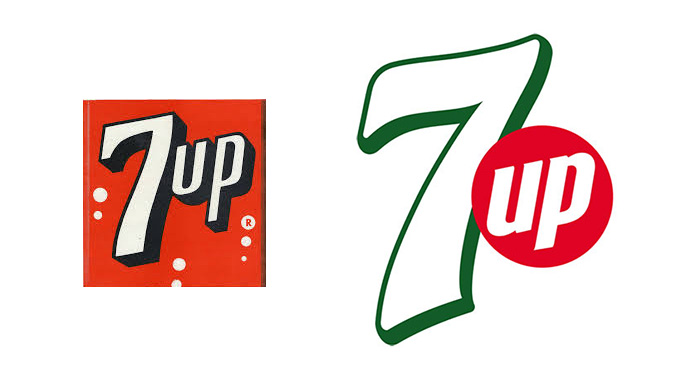
Out with the bright colors and bubbly lettering, in with the retro vibe. As you can see below, the new logo heavily borrows from the roots of the brand history. Notice the shape of the 7, the shadow/stroke treatment, and the fact that “up” is written in lowercase for the first time in decades.


new-7up-logo


The ad below reinforces the vintage appeal with the glass bottle taking the hero spot. The “Feels Good to be you” slogan feels sort of random and pointless, which makes it fit right in with most soft drink slogans!


new-7up-logo


What Do You Think?


7UP seems to constantly be in a state of identity crisis, so I think it makes sense for the latest web design Singapore attempt to take a step back and explore the roots of the brand. Personally, I miss Spot, but all that proves is the power of marketing to 90s kids with cartoon characters. Overall, I like the new logo better than the 2010 version. What do you think? Is the new branding a step in the right direction?


7UP"s New Logo Goes Old School