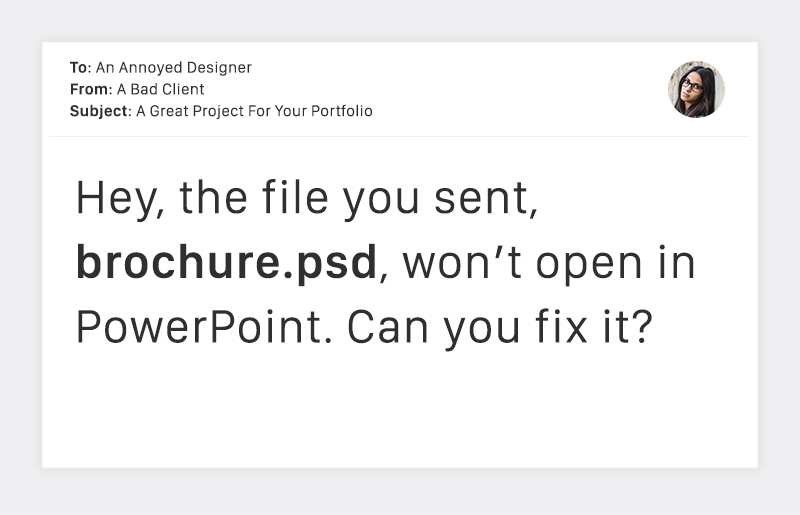
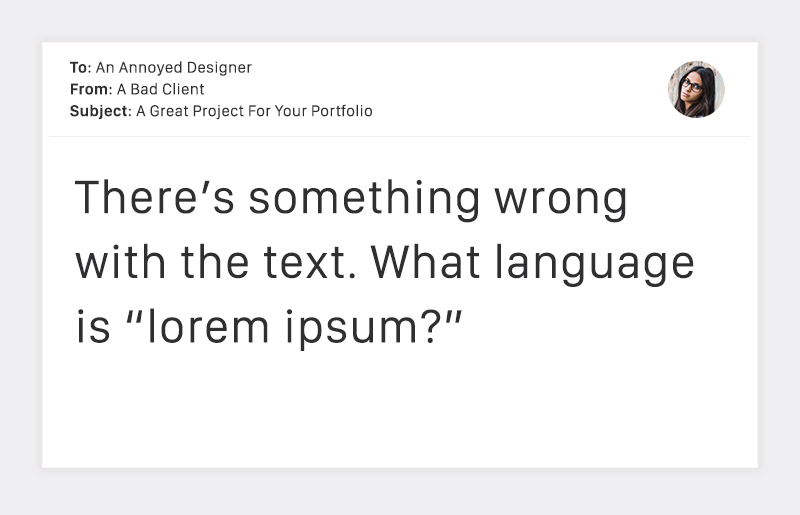
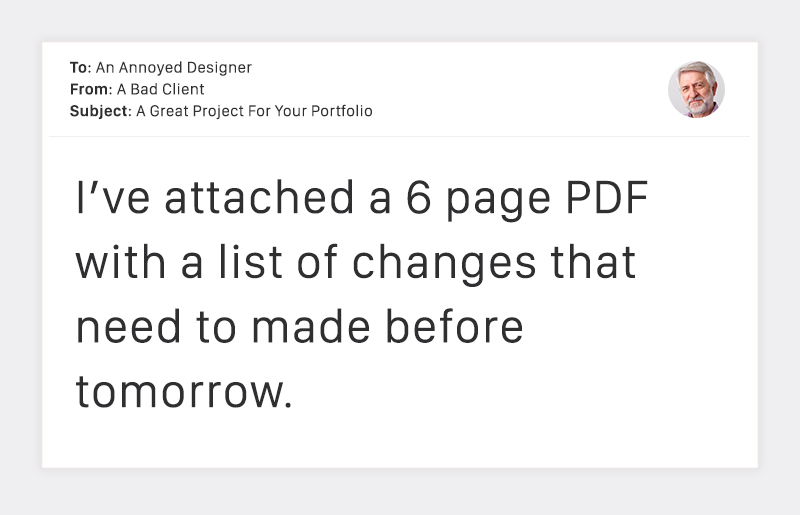
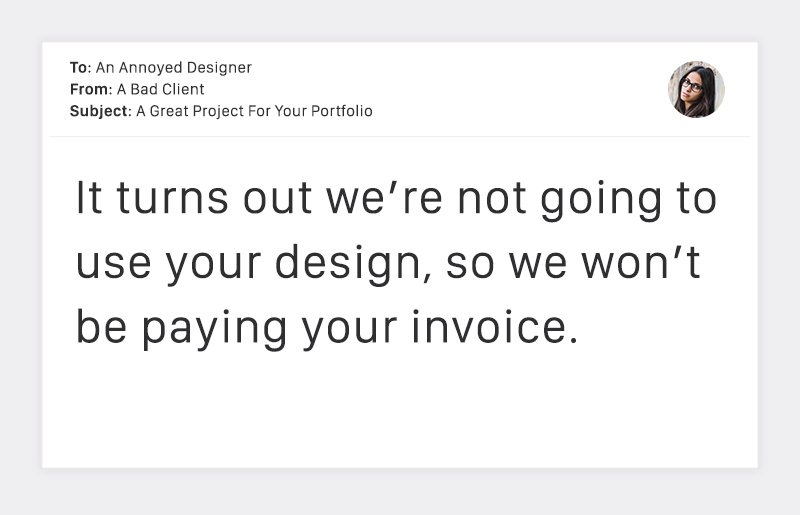
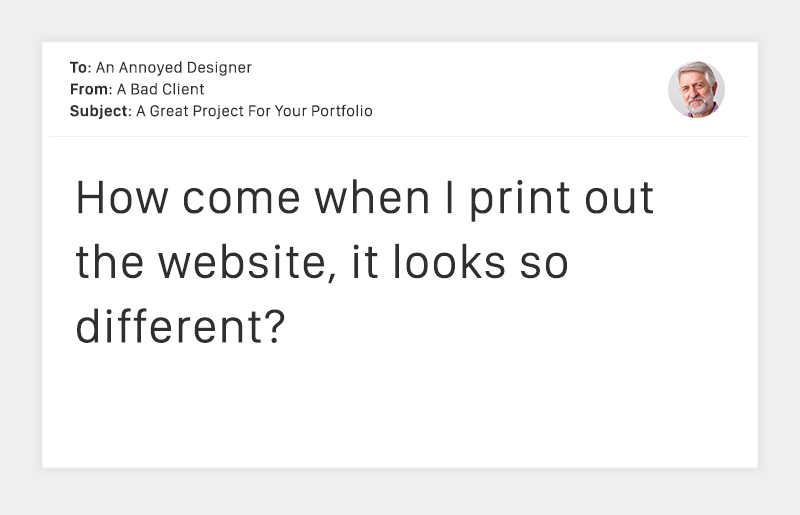
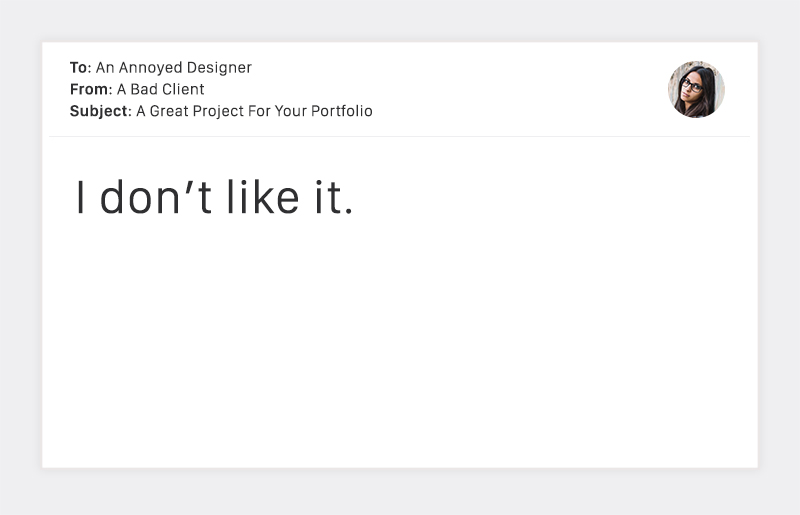
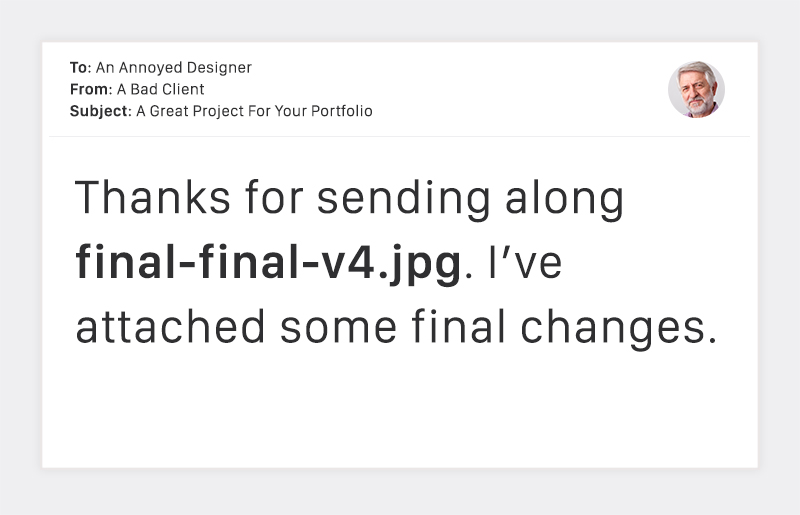
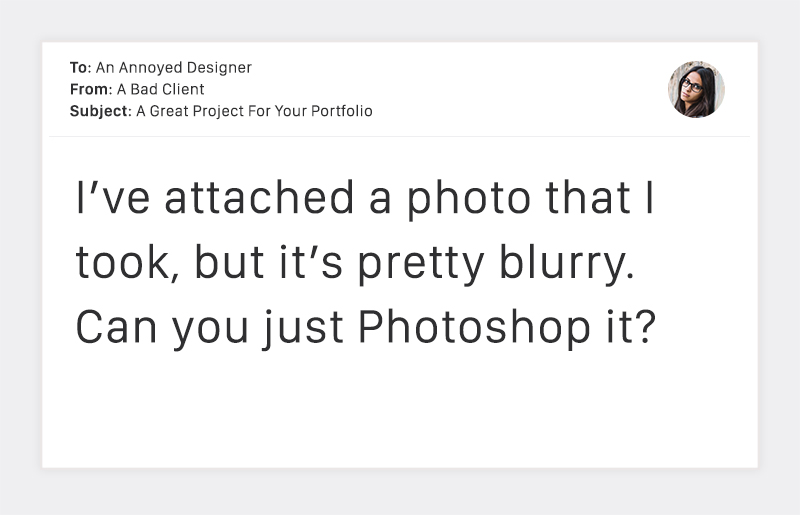
We’ve all been there: a client really, really wants to make a change to your design that, as a designer, you can immediately tell will result in disaster.
It happens to every designer, and, as far as I can tell, there’s no real way to avoid it. However, there is a method you can use to mitigate the problems caused by what I like to call “Sudden Client Designer Syndrome.” It has to do with User Experience (UX). Contrary to popular belief, UX is useful not only to web developers, but to any designer who designs any kind of product, information, or experience with a “user,” “consumer,” or “customer” in mind.
Create Objectivity
The reason why clients develop Designer Syndrome in the first place is that design is almost universally seen as a subjective discipline. In many ways, that’s completely true. Designers are called upon to navigate the fine line between marketing and art to develop creative solutions to problems.
It’s all very romantic, and clients can get to caught up in that mythology that they lose track of the fact that there is actual knowledge, experience, and quite often training that lies behind those decisions their designers make with seemingly no effort at all. People forget that it only looks easy. That’s okay; they’re only human. But if you’re the designer caught in the middle of this tangle, it can make your work quite frustrating and emotionally draining.

However, if you play to your clients’ true desires, you can often get them to understand the inherent objectivity that lies at the heart of what you do. What are your clients’ true desires, you ask? Well, if they’re anything like my clients, their true desires probably have something to do with generating maximum profits for their businesses.
This is an objective goal that you can use to your advantage. Your client may secretly wish he or she were an art director or a designer themselves, but the reason they’ve hired you is because they want to generate the most lucrative product, service, or information possible.
Your primary task when dealing with a ‘wannabe designer client’ is to remind them of this fact as often (and as politely) as possible. The easiest way to do this is to make sure you always talk about your design decisions in terms of the user, rather than isolating the visuals or the mechanics and selling the client purely on your design’s technical merit.
Whether your client is selling shoes, a personal philosophy, or organic dog food, he or she can always be persuaded to put their users first. (If they can’t, it’s probably time to find a new client.)
Do Your Research
Here’s a trick you can use to automatically boost your desirability to clients, getting them not only to trust you for every project they give you, but which will also make you a sought-after expert to other prospective clients in the same industry: figure out the target audience your client is targeting, and focus your effort on getting into the head of the ideal example of that audience.
When you zero in on serving a particular market through your clients, you automatically raise your desirability as a designer, and you make your career less about your individual clients, and more about the industry that needs your services.

You can spend a lot of time being a “generalist” and go after any kind of design job you can find, or you can narrow down your services to a few key markets and spend some time getting to know exactly what goes on in the psychology of those types of consumers.
For example, if you’re a freelance branding designer who does work for start ups, take some time and think about exactly what kind of start ups you’re targeting. What do they sell? Who buys their products or services. Those are the people you want to please – not your client.
And, phrased just the right way, this will become evident to your client as well. Of course, you should never be rude or condescending to a client, but if you make it clear that you are an expert on your client’s target market, they will trust you that much more, and they will also recommend you to their colleagues in the same industry that much more frequently.
Be the Client
Creating user personas is an excellent technique that business owners use to gain insight into the psychology of their target market. Designers use it as well when they are developing content or products on their client’s behalf. However, you can also use this technique on your clients themselves.
As I said before, your career will be much more streamlined if you focus in and get to know the target demographics you serve most often with your designs. But it’s also a good idea to spend time getting to know the clients you serve most often. Clients are your target market; as such, they can be dissected and studied using business savvy and marketing psychology.
It might sound cold and mechanical, but believe me, it’s much simpler than going into a design meeting completely blind, attempting to figure out each client individually. Doing several hours of research in your spare time will eliminate the guesswork from your freelance business, and your clients will be immensely grateful that you can seemingly “read their minds.”

So, how do you go about doing this research? By finding the types of people you’d most like to work for, and contacting them about their wants and needs in a designer. Email them, call them up, invite them out for a chat over coffee.
Gather enough of this data and you’ll start to see patterns emerge. These patterns are the basis for your client persona – they are what you can use to generate a bulletproof knowledge of nearly every client you serve. There will always be exceptions, but by gathering research, you can dramatically reduce the likelihood of getting a client that you absolutely can’t deal with. And if you do get one of those clients, well, you know what to do by now (hint: it involves running).
Concluding
It’s important to actually do these things, rather than just think about them. The reason is that what you think your clients and target users want is often very different than what they actually want. This is why so many business ideas fail before they even get off the ground. People don’t do their research; they don’t communicate directly with their market, and so they fail to realize what others are really looking for.
To position yourself ahead of all the other lazy, mediocre designers out there, it’s important that you actually take the time to get into the heads of your market, whether it’s clients or users.
What Do You Think?
Do you spend time getting to know what your clients or end users really want? How has it helped your design process?
All images from Max Griboedov’s potfolio on Shutterstock.

The post How To Prevent ‘Sudden Client Designer Syndrome’ appeared first on Speckyboy Web Design Magazine.
How To Prevent ‘Sudden Client Designer Syndrome’